|
|
|
|
| |
Dear Reader,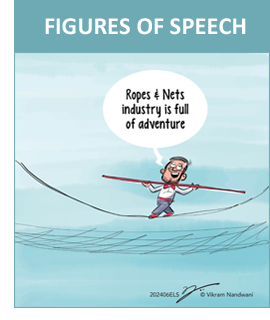
Amidst the buzz of high-profile industries, there exists a quiet but indispensable sector: ropes and nets. These simple yet crucial products are the backbone of maritime safety, fishing, agriculture, construction, and more. Despite their vital role, the ropes and nets industry often operates behind the scenes. Technological advancements have made synthetic ropes stronger and more eco-friendly, while smart manufacturing techniques have boosted efficiency and quality. These innovations ensure that the industry not only meets current needs but also leads in sustainability efforts.
Looking ahead, as global challenges evolve, so will the ropes and nets sector. With ongoing advancements in robotics and sustainability practices, it continues to play a pivotal role in modernizing industries worldwide. It is time we recognize and appreciate the unsung heroes that quietly ensure the smooth functioning of our daily lives and global economies.
Empowering Times (ET) this month looks at 'The Ropes and Nets Industry: Unfancied but Vital Business.'
In the Thinking Aloud section, Jay emphasizes the urgent need for India to focus on re-skilling its workforce and enhancing its manufacturing sector, leveraging new technologies like AI, to drive economic growth and achieve the nation's goal of becoming a USD 5 trillion economy. On the Podium, Dr Navnath Tarle, COO of Tufropes, underscores the robust growth of the ropes and nets industry driven by sustainability, technological advancements, and global demand diversification. In the We Recommend section, Ramona Parsani reviews "At the Wheel of Research" by Anuradha Mascarenhas which highlights the biography of Dr. Soumya Swaminathan, offering insights into her grace, leadership, and dedication during her tenure as Chief Scientist at WHO.
In Figures of Speech, Vikram's navigates the thrilling heights of the rope industry.
Please also Click Here to check out our Special issue of ET, which is a collation of selected themes that were featured over the years highlighting the changing landscape of the business world. This special edition has been well received and can be Downloaded Here for easy reading and is a collector's item.
As always, we value your opinion, so do let us know how you liked this issue. To read our previous issues, do visit the Resources section on the website or simply Click Here. You can also follow us on Facebook, LinkedIn, X, Threads & Instagram - where you can join our community to continue the dialogue with us!
|
| Succeeding in Business: Nurturing Value in Family Business |  |
|
 |
Click below to order your copy now


Special offer for Empowering Times readers. Get 30% discount by using coupon ETSPECIAL on the Notion Press online store.
Click here to connect with Jay.
|
|
|
|

|
|
With the elections done, it is time for the real effort of building the nation. Commentators – all wise after the event – are dissecting the causes of defeat/success of every party while political knives are getting sharpened for the next joust in State Assembly polls. Which begs the question who will address the real issues that hold India down?
Arguably it is the government's task to invigorate the economy – but the onus of nation building is not their to-do alone. It is important for the others to do their part. An important element in this story is getting the manufacturing part right. It is a truism that for any country to remain sustainably great, they need to have a robust manufacturing base. This is not to deny the role of the services economy – but for the economy to have strong foundations and to be truly vigorous, it would be perilous to ignore the need for manufacturing depth, breadth, and excellence.
The game, however, has changed and rules have been reset by a new player who was waiting in the wings for nearly a decade and more: Artificial Intelligence (AI). Andrew Ng, a powerful voice in the AI world, likens it to electricity. The promise it holds is transformational, much as electricity changed the world (and not just in industry but also in Agriculture, Healthcare, Households, Education, etc.), Andrew's point is that AI will cut horizontally across our society, touching everything in its path. The jury is still out as to whether this is a boon or bane. But there is no stopping change, as we all know too well. Skills, jobs and Industry, are where this play will be most evident, as we have begun to get a glimpse of its immense potential.
Where does that leave us? There is an urgent call for action to re-skill everyone, and the re-education work has to be undertaken in today's ITI and other technical centres which produce the vast semi-skilled and skilled industrial labour that is the feeder route to factories. The manufacturing units are getting re-tooled too to stay competitive, with industry 4.0 becoming the new mantra.
The interesting feature of the new units will also be that they will be female friendly shop floors. Conventional thinking has been that women can be used only in electronic factories and associated components manufacturing units. This lie has been exposed as larger factories assembling cars, batteries, farm equipment, etc., are engaging women for almost all their shop floor work, as robotic activity and automation has reduced the 'muscle power' needed for mindless work. The benefits accruing range from higher productivity, lesser attrition to better industrial relations, to name a few. Suffice it to say that except for heavy industries and mining, women can potentially be ideal members of the workforce in all other industries. However, even in these sectors, things are changing. Reports showed that globally the mining and metals industry has employed only 12% women (the numbers in India are around 2.5 to 3% for coal and iron ore mining, in contrast). But the Central Government has modified rules to allow women to work below the ground during daytime in technical, supervisory and managerial jobs, apart from work in the opencast operations at all times. Things are bound to change in the coming years, therefore.
Back to the point on jobs and manufacturing. An interesting McKinsey report published in 2020 highlighted that there are 11 value chains that presents over USD 300 billion GDP growth opportunity for India (both exports and domestic consumption). The sectors identified include new ones like Aerospace, Furniture, Capital goods & Machine tools, Vehicle components, apart from the traditional ones like Apparel, Agriculture, Metals, Leather & rubber etc.
Thus, the message is clear – there is ample scope for building the foundational base that provides a thrust to the USD 5 Trillion economy that is the stated goal of the country. The onus is both on government and private industry to work in tandem to deliver on this potential – and the political environment has suddenly become the unpredictable variable that can upset all calculations. Therein lies the rub – and the coming months will unfold whether the engine of growth is on track – or, tragically, being derailed.
back to top ^
|
|

|
|
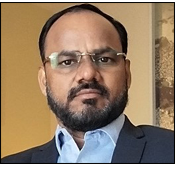 Dr. Navnath Tarle serves as the Chief Operating Officer and Executive Director for India at Tufropes & Tufnets Pvt Ltd, a subsidiary of Cortland International Company. He holds a mechanical engineering degree from Nashik and an Executive MBA in Operations Management from Symbiosis, Pune. Additionally, he has an honorary doctorate from YSU, USA, and CIAC for Excellence in Management, and has completed an executive program in Strategy and Leadership at IIM Kashipur.
With over 29 years of extensive experience in the foundry, machining, electroplating, and painting industries, Dr. Tarle has expertise in both automotive and non-automotive sectors, including synthetic technical fiber. His technical acumen spans processes such as gravity die casting, pressure die casting, sand casting, precision machining, and hose, pipe, and tubing manufacturing. Dr. Tarle's career includes operational and leadership roles at prominent companies like Mahindra & Mahindra Ltd, Jaya Hind Industries Ltd, IKEIL Metals Pvt Ltd, Sigma Electric Manufacturing Corp Pvt Ltd, and Global Autotech Ltd.
Dr. Tarle is recognized for his significant contributions to operational excellence and sustainable growth. He has led greenfield projects, such as the establishment of two sand casting plants in Jaipur with a total investment of INR 150 crore, and has driven various change initiatives in EHS, Lean, 5S, and other operational excellence practices. He has also managed due diligence processes for acquisitions both in India and abroad.
As an accomplished Six Sigma Black Belt certified by ASQ and a Green Belt by IQR, Dr. Tarle has been honoured with the CEO Change Leader Award at Sigma Electric. He is an active member of the South East Asia Leadership Academy (SEALA) and a CII panel member for operations excellence and energy sustainability in the Pune region. He has also participated as a speaker at various industry conferences, including CII's Energy Conservation and Sustainability, Alucast on Six Sigma Implementation in the Foundry Industry, and Green Manufacturing for Sustainability.
Currently, at Tufropes & Tufnets Pvt Ltd, Dr. Tarle is responsible for overseeing operations, R&D, SCM, marketing, and driving the overall business strategy to ensure profitable growth. He is passionate about Lean methodologies, Total Productive Maintenance (TPM), Six Sigma, operational excellence, people development, leadership development, and sustainability. His expertise in turnaround and transformation makes him a valuable asset in driving organizational success.
ET: Can you provide an overview of the ropes and nets industry and its significance in today's global market?
NT: The ropes and nets industry is rapidly growing and transforming, driven by the increasing focus on sustainability. Governments worldwide, including India, have launched various schemes and budget provisions to promote sectors like the aquaculture industry. The demand for synthetic ropes is significantly influenced by their low weight and high strength characteristics. Synthetic ropes are also safer to use compared to traditional steel wire ropes, commonly used in the marine, mining, oil, and gas industries. The synthetic rope market is projected to reach USD 2.1 billion by 2025, growing at a CAGR of 5.6% from 2020 to 2025.
ET: How has the demand for ropes and nets changed with advancements in technology and materials, and are there new applications being developed for these products?
NT: The ropes and nets industry is rapidly evolving due to advancements in technology, including alternative materials, composites, and green, sustainable solutions. Smart products leveraging Industry 4.0 and AI are adding new features to these product lines, making them easier to manage and more efficient for end-users. As part of Cortland International, we benefit from their niche technology and strong brand reputation, enhancing our cross-selling opportunities.
ET: What opportunities do you see for growth and expansion in this sector, both in the Indian and global markets?
NT: Though I was new to this industry, after studying the investment thesis and spending a year in the business, I see numerous opportunities for expansion both in India and globally. The rope industry, one of the oldest, serves various sectors like marine and shipping, defense, oil and gas, offshore energy, agriculture, aquaculture, and safety management. India's strong economic growth has resulted in a 10-12% year-on-year growth in the domestic market, supported by favorable government policies for the fishing industry. Additionally, unexplored sectors like adventure sports and construction present new opportunities for growth.
ET: In your opinion, with the government's push for 'Make in India' how cost effective is manufacturing in India, as compared to the traditional hub, China, and the emerging centres, like Vietnam? Also, what is the degree of automation in this industry?
NT: The 'Make in India' initiative provides a competitive advantage for Indian manufacturers. However, there is still room for the government to further support this advantage, as emerging low-cost countries like Vietnam are creating competition. The degree of automation in this industry is currently low, but we are aggressively exploring low-cost automation and Industry 4.0 solutions to achieve operational excellence and move from good to great.
ET: Can you provide an overview of the different products that your company Tufropes offers and their applications? As a leader, what is your vision for the future of Tufropes?
NT: Tufropes offers a wide range of products, from commodity class 1 ropes to mission-critical ropes for applications in aquaculture, marine and shipping, agriculture, and safety nets, transportation, and sports industries. My vision for the future of Tufropes is to transition from a good company to a great one by focusing on operational excellence and becoming the employer of choice in the ropes and nets industry.
back to top ^
|
|

|
|
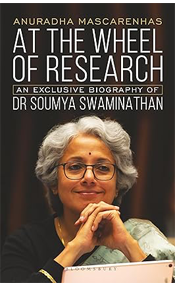
"At the Wheel of Research – An exclusive biography of Dr Soumya Swaminathan" written by Anuradha Mascarenhas was one book I really looked forward to reading. Having met Soumya once before and over a few other e-interactions, where her innate grace shone through – I wondered how she managed to be graceful, calm, confident and humane whilst serving as Chief Scientist to the World Health Organisation (WHO) during the most challenging time in recent history. The book delivered and gave me insights to this question buzzing in my head.
Anuradha chose well when she decided to write about Soumya. We all love to read stories of heroes, of the brave, of those who overcame odds to make a difference and continue to do so. With enough research, anyone can write a biography. But will that impact a future generation? Will the book contribute to something more than a book?
Our demography in India is already led by a young lot. Apart from the new age skills that this generation seemingly pick up so easily, they need powerful examples from real life - that being focused on a vision larger than oneself is what is needed to take themselves and India to being an economy to contend with, in all aspects, maybe to even lead a happier life. Here is where Anuradha has done justice - one, in choosing Soumya as the protagonist and two, she has understood the inner drive and the aspiration of Soumya, all for the betterment of humankind, and has conveyed it well.
A timeline leading up to Soumya's current position as the head of the M. S. Swaminathan Research Foundation can sometimes confuse the reader. The author's fluid movement between different years and roles may require the reader to revisit previous pages for better understanding. Of course, this might be so, as numerous names from the science fraternity grace the book with anecdotes about Soumya. And if one is not too familiar with the names in the book, there is a bit of re-reading to be done. I loved that each person who was interviewed built up the character of Soumya. The comments by them were consistent with my own memory of my interaction with her. It is evident that the author has taken time through the interviews to understand Soumya as a human being and not just as a scientist. There is no such thing as a universally loved book. With the many names in the book, you want to hold on to them, though difficult to remember, because I wanted so much to care and know how they shaped Soumya.
What did stick a bit was the large amounts of content, written in a journalistic style on M S. Swaminathan, her father and Mina, her mother, and of course on COVID, that was shoehorned into the book. Sometimes it was without context (or so I thought), until much later I find the reason for the information. This took away some of the pleasure of reading, as my mind had to switch between two different styles of writing. Having said that, the content was very informative about her father and mother and their respective work and their influence in shaping Soumya.
Without getting in too much into conversations around gender and women in leading roles, I would have loved to read more on Soumya's thoughts on bringing up her family. There is one sentence about having dinner with the family every day, but parenting is more than that. With more women getting in to the workforce, this is an area that is always conflicted. Soumya seems to have weathered it all, but how?
This book could have done with better proof reading, copy editing and content editing too. However, an author should know that every reader is different. This book is a piece of the author's heart and I treat it with respect.
I believe this biography gives the reader a sense of encouragement, and serves as a cautionary tale to us the reader - in that Soumya knows her work is not finished. As is mentioned in the book - that she understands that public service is impact at scale and she has chosen not to rest on her laurels but wants to build on the work of her father. Throughout the book we hear of her holistic approach to her work and choosing to not just work on her father's vision of interlinking agriculture, nutrition and health but lending her vast expertise to other areas like non-communicable diseases for one, shows this visionary ability of hers.
This is Anuradha's first book straddling report writing and writing a book and I look forward to reading more of her work.
back to top ^
|
|
| |
|
THROUGH THE LENS
|
|
|
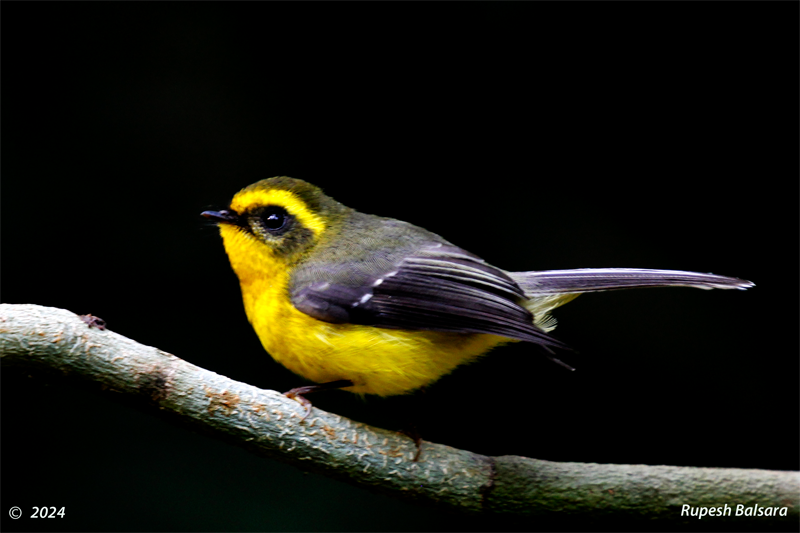
Nature photographer Rupesh Balsara spots the Yellow-bellied Fantail, a small and colorful bird found in India. It inhabits dense forests, bamboo thickets, and moist deciduous woodlands where it hunts insects such as beetles, flies, and ants. Recognized for its vibrant yellow belly and long, elegant tail feathers, the bird is often observed flitting adeptly among foliage, displaying its tail feathers during territorial displays.
|
|
|
|
Empowered Learning Systems
www.empoweredindia.com
101, Lords Manor, 49, Sahaney Sujan Park,
Lullanagar, Pune – 411040,
Maharashtra, India


|
 The ELS Lotus logo is trademark of Empowered Learning Systems The ELS Lotus logo is trademark of Empowered Learning Systems
©2024 Copyright Empowered Learning Systems (ELS). For private
circulation to clients and well-wishers of ELS. While ELS endeavors to ensure
accuracy of information, we do not accept any responsibility for any loss or
damage to any person resulting from it.
|
|
|
|
|
|
| |