|
|
|
|
| |
Dear Reader,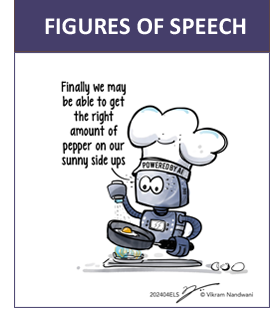
In the realm of culinary exploration, an intriguing partnership has emerged - one that at first glance may appear unconventional: Data Science and Gastronomy.
This month on Empowering Times (ET) we delve into the seemingly disparate worlds of data analysis and culinary artistry, answering the question: 'Data Science and Gastronomy: An Odd Couple?'
While Data Science operates within the realm of algorithms and statistical models, Gastronomy thrives on sensory experiences and culinary intuition. Yet, beneath the surface, lies a harmonious collaboration waiting to be uncovered. Data Science offers gastronomy a lens through which to analyse trends, optimize processes, and enhance flavours, while gastronomy infuses Data Science with the richness of human experience and the complexity of taste.
Together, they embark on a journey that redefines traditional culinary boundaries, harnessing the power of data-driven insights to revolutionize food innovation and exploration.
This month, we explore the intersection of these two worlds - where science meets art, and innovation knows no bounds. Bon appétit and happy exploring!
In the Thinking Aloud section, Jay highlights the integration of AI into kitchen appliances and cooking processes which promises a future of personalized recipes, optimized meal planning, and even robotic assistance, revolutionizing the gastronomic experience as we know it. On the Podium, Dr. Ganesh Bagler, a computational researcher, shares his thoughts on Computational Gastronomy which aims to revolutionize food through data science, blending artificial intelligence with culinary expertise for sustainable, personalized, and ethically-conscious gastronomic innovations. In the We Recommend section, Jay reviews Andrew McAfee's book, 'The Geek Way', which explores the rise of geeks in the business world over the past few decades, emphasizing their unconventional problem-solving mind-set and cultural values of science, ownership, speed, and openness, while also questioning the sustainability of this phenomenon in the face of emerging challenges and societal backlash.
In Figures of Speech, Vikram's robo-toon peppers his sunny side up with perfection!
Please also Click Here to check out our Special issue of ET, which is a collation of selected themes that were featured over the years highlighting the changing landscape of the business world. This special edition has been well received and can be Downloaded Here for easy reading and is a collector's item.
As always, we value your opinion, so do let us know how you liked this issue. To read our previous issues, do visit the Resources section on the website or simply Click Here. You can also follow us on Facebook, LinkedIn, X, Threads & Instagram - where you can join our community to continue the dialogue with us!
|

Out Now!
Succeeding in Business: Nurturing Value in Family Business
As a counselor and trusted advisor, K. Jayshankar (Jay) offers practical insights in his book, drawn from four decades of experience. These insights are combined with conceptual elements to create a valuable primer for family businesses aspiring to succeed in the competitive marketplace of India. The book explores key factors driving successful growth in family businesses and addresses challenges related to generational transitions, value preservation, and the infusion of new ideas.
|
|
Click below to order your copy now


Special offer for Empowering Times readers. Get 30% discount by using coupon ETSPECIAL on the Notion Press online store.
Click here to connect with Jay.
|
|
|

|
|
Ah, food! There's nothing more comforting for a hapless traveler, when he returns home hungry after some days on the road, living off irregular meals at hotels and restaurants, with familiar aromas wafting around him, sitting down to a home-cooked dinner is not just a satiating experience but also offers pleasures hard to describe. If you ever needed an example of 'psychological safety', this definitely is one!
Similarly, the culinary expectations from a restaurant are different too. From the willingness to try different cuisine to the anticipation of unlocking secrets of the palate ('Chef, surprise me!), and the company of friends with whom you have bold and challenging conversations, the joy of dining is a different universe to a connoisseur. For the rest of us mere mortals, fine dining represents a challenge that is often intimidating. Yet, it is a fact that when consuming food has gone past the survival stage, mankind's inventiveness has made the kitchen a veritable laboratory of tasteful explorations. Thus has evolved the world of gastronomy, an adventure welcomed by many.
From the world of home cooks to the industrial kitchen serving hundreds (thousands even) in today's factories, from exclusive Michelin restaurants to the world of packaged airline food, there has been a sea change in our approach to food preparation and consumption. No longer are people restricted to local tastes as awareness of food items from other cultures and geographies is widespread. While this has not dispelled taboos about food sources or preparations (sadly, in some cases it has got hardened, fueled as it were to mischievous misinformation), the advent of technology into the kitchen has created a whole new breed of 'YouTube Chefs'. Of course, open markets have also been instrumental in increasing availability of newer and non-traditional vegetables and exotic fruits (think gherkins, variety of mushrooms, broccoli, avocados, dragon fruit, etc.) into Indian households.
Changing lifestyles has not only changed food habits – both for better and worse - but has also generated a new interest in scientific aspects regarding cuisine. Arguably, science entered the kitchen eons ago, and has been an essential element since man discovered fire and found that cooked food is more palatable than surviving on raw products of nature (both vegetarian and animal related). Apart from the art of blending ingredients to produce a tasteful meal, traditional knowledge also extended to manner of stocking and preservation of food products. Modern science has delved into nutrition and also induced conversation regarding food pairing and special diets to achieve medical outcomes. And, when you bring the arguments supporting carbon footprint and sustainability, then suddenly, the game changes! The strong advocate may even convince you that it is your moral duty to save the planet by saying no to certain foods, taste be damned.
What will make the future more exciting is the infinite possibilities when AI enters the kitchen. The first results are already visible: in kitchen appliances. Early models of IoT Refrigerators are being sold but it will be a while before they become mainstream. The smart built in sensors offer many benefits – from energy saving and security measures to examining the contents of the fridge, deciding on ordering and procurement of household necessities to even making recipe recommendations based on what is available inside, apart from advising on calories, etc. Other appliances in the offing include touchscreen toasters, smart ovens, advanced pressure cookers, superior air fryers, AI powered dishwashers, etc. Personalized recipes will keep you faithful to your diet plans besides advising you on how food wastage can be controlled. The robot waiter is a reality both in small restaurants as well as five-star hotels – but will the robot chef become common place? The jury is out on this one, though it is commonly accepted that they would be very useful assistants to a chef, both with advice and insights, and cost optimization ideas. Take your mind back to 2014 when IBM's Chef Watson made its entry, and the concept of cognitive cooking made its first appearance. A decade later, there are still some surprised faces when the use of AI in cooking is mentioned. But some MasterChef's are at home with this super brain that they can call upon to offer ideas. And, as the power of AI unfolds further in the coming days, this too will be an intrinsic feature of a high-profile kitchen.
A graceful acceptance of this brave new world is perhaps a wise option. In such a world, molecular gastronomy sits well with computational gastronomy and new discoveries will abound. Food in science fiction has ranged from the unusual to the positively repulsive – from present perspective. However, when you consider that astronauts baked cookies in space in 2019, and are eating three meals a day that are tasty, nutritious and easy to consume, providing them with 2500 calories through vegetarian and non-vegetarian options, then you know that science is now an integral part of the kitchen. Let's not complain then of any foreign constituent in our soup, shall we?
back to top ^
|
|

|
|
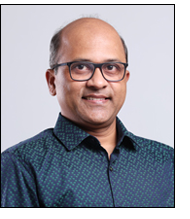 Dr. Ganesh Bagler, a distinguished Professor at IIIT-Delhi, embarked on his scientific journey with aspirations of becoming an astronomer as a teenager. Trained in physics, computer science, and computational biology, his path took a transformative turn towards the realm of gastronomy. In 2007, he earned his Ph.D. from CSIR-Centre for Cellular and Molecular Biology, laying the groundwork for his pioneering work in 'Computational Gastronomy.'
Dr. Bagler's multidisciplinary background serves as the bedrock for his trailblazing research, which fuses food with artificial intelligence. Through the establishment of keystone data repositories, algorithms, and applications, he has shaped the landscape of this emerging field, addressing pivotal aspects such as food, flavors, nutrition, health, and sustainability.
As the founder of Foodoscope Technologies Private Limited, Dr. Bagler embodies entrepreneurship alongside academic excellence. His audacious vision revolves around the concept of 'Making Food Computable,' with the aim of revolutionizing the global food landscape. His start-up endeavors are complemented by his academic accolades, including the prestigious India Science Book Fellowship, awarded for his popular science book titled 'Making Food Computable—The Data-driven Science of Food.'
Beyond his scientific contributions, Dr. Bagler is recognized as a prolific interdisciplinary scientist, an avid reader, and a compelling science communicator. He has graced the TEDx stage, captivating audiences with his insights and vision. His research interests span a diverse array of topics, including complex systems, computational biology, network science, bioinformatics, and computational creativity.
In the realm of education, Dr. Bagler's teaching interests mirror his research pursuits, encompassing computational and systems biology, network science, computational gastronomy, computational creativity, and the philosophy of science. Affiliated with the Complex Systems Laboratory and the Infosys Centre for Artificial Intelligence (CAI), he continues to push the boundaries of knowledge and innovation, shaping the future of computational research and its applications in diverse fields.
ET: Could you explain the concept of "Making Food Computable" and its potential impact on the global food landscape?
GB: Computability refers to our ability to quantify a phenomenon and the application of algorithmic methods to answer interesting questions. Consider chess. Despite being a board game based on simple rules, the sheer number of configurations and possibilities of moves are mind-boggling. As a consequence, human intelligence and intuition have been considered of paramount importance in chess. Despite that, the rise of supercomputing led to Deep Blue winning against the then-world champion Garry Kasparov in 1997. Similarly, a data and computation intensive approach has deeply impacted various aspects of life. From weather prediction to Google Maps navigation. From tagging on Facebook to logging in to a MacBook.
Cooked food is a profoundly sensory experience and inherently subjective. The very idea of making food computable sounds outlandish. How could one possibly quantify subtle nuances of food and cooking, let alone make it computable?
However, the increasing availability of structured data and the advent of computational methods are dramatically changing the artistic outlook toward gastronomy. The application of data-driven strategies for investigating gastronomic questions has opened up an all-new paradigm for the study of food and cooking. Computational Gastronomy is a data science that blends food, data, and computation towards achieving data-driven food innovations. A data and computing-centric approach will enable the transformation of the food landscape toward achieving better public health and nutrition. Quantifying aspects of food and cooking and effective use of computational techniques will transform every aspect of the culinary experience. The recipes we cook, the flavor of food, its nutritional and health consequences, and even the environmental impact of the food system. All aspects of food can be transformed by asking relevant data-driven questions revolutionalizing the food landscape. Our lab, the Complex Systems Lab at IIIT-Delhi, has played a pioneering role in establishing the foundations of computational gastronomy with the work done in the last eight years. With the food-centric data repositories, algorithms, and applications, we are pursuing this audacious dream of transforming the global food system for a better food future.
ET: What potential do you see in leveraging artificial intelligence and machine learning for personalized nutrition or dietary recommendations?
GB: While on a day-to-day basis, we tend to consume diets that are primarily a social consensus, our individual dietary choices are nuanced and personal. Similarly, while the prevailing nutrition paradigm has, for decades, been recommending a generic diet for desirable health outcomes, recent research has highlighted highly personalized requirements. For example, eating the exact same diet would lead to divergent glucose responses in different individuals, which has consequences for type-2 diabetes.
Typically, personalization is done by subject matter experts who understand the subjective preferences of an individual. Artificial intelligence (AI) is an over-encompassing term referring to our ability to capture human intuition and expertise in a computable system. Personalized recommendation systems are AI agents that provide individual-specific advisories by accounting for personal preferences. They use mathematical and statistical tools, such as machine learning, to learn patterns inherent in personal choices or biases. We have been witnessing such recommendation systems in various domains of our life. Be it the recommendations made by Amazon for books bought together or Netflix's suggestions for movies you may like. Recommendation systems rooted in sophisticated pattern-mining techniques have been doing wonders.
Once we capture the relevant data correlates of food, nutrition, and health consequences on the one hand and individual preferences and health conditions on the other, it becomes possible to invoke the power of recommendation systems. This is a complex problem, given the layered intricacies of the human body, food, and how they interact with each other. However, with the availability of a broad spectrum of biological data and increasing access to nutrition data, I am confident we will be able to have personalized diet coaching algorithms in the not-so-distant future.
ET: As computational gastronomy evolves, what ethical considerations do you believe researchers and practitioners should keep in mind, particularly regarding data privacy, cultural sensitivity, and sustainability?
GB: My lab's first gastronomic venture was the study of food pairing patterns in Indian cuisines. We collected around 2500 recipes from eight regional cuisines spanning the length and breadth of the country and used these as representative of Indian culinary diversity. Clearly, we were wrong. While the recipes compiled from the legendary Tarla Dalal's website were an excellent beginning point, they were nowhere close to reflecting the vast diversity of Indian culinary practices. Our data was evidently biased towards elite, documented recipes while ignoring food practices of a cross-section of society that are not well documented. The lesson learned from this experience was never to underestimate the depth of culturally ingrained culinary diversity and the need to be inclusive.
Eating practices are deeply ingrained with cultural sensitivities rooted in religion and social divisions. What we eat is often filtered by religious and cultural prescriptions and proscriptions. I feel the strong need to account for these factors while both compiling gastronomic data and implementing computational algorithms. For example, while our novel recipe generator (Ratatouille) is capable of generating potentially palatable recipes by ingredient permutations and combinations, it needs to be aware of the cultural context of the user.
Food systems are responsible for a third of global anthropogenic greenhouse gas emissions central to global warming and climate change. Food consumption is dictated by recipes, which act as the cultural capsules that encode traditional protocols for culinary preparations. We have built strategies for estimating the carbon footprint of recipes: SustainableFoodDB. We believe this effort will help provide actionable insights into the environmental sustainability of culturally influenced patterns in recipe compositions. Systematic compilation of fine-grained carbon footprint data is the way forward to address the challenge of sustainably feeding an anticipated population of 10 billion.
ET: As computational gastronomy gains traction, what opportunities do you foresee for collaboration between researchers, chefs, food industry professionals, and policymakers to advance the field and its societal implications?
GB: Our computational gastronomy forays have touched upon all the significant facets of food and cooking, including recipes, flavors, nutrition, health, and sustainability. Starting with curiosity-driven questions, this journey has come a long way in addressing many industry-facing challenges and questions at the heart of societal implications that touch on public health and nutrition. We have been working with chefs to identify synergies between a data-driven approach that computational gastronomy takes and the intuitional worldview of culinary professionals. Among the prominent chefs who have been engaged in this ongoing intellectual exchange are Chef Manjit Singh Gill, Chef Akshay Malhotra, Chef Parvinder Singh Bali, Chef Rahul Wali, Chef Sanjay Thakur, and Michel Star Chef Garima Arora. We are also exchanging notes and collaborating with IHM, Pusa, a premier culinary institute in Delhi.
Since the time our exploration of Indian cuisine got exceptional attention from the media and academia, the industry has been keen on using nuggets of wisdom drawn from data-driven investigations for practical purposes. In this research exploration, we identified the crucial role of specifying the idiosyncratic patterns in ingredient combinations in the first-ever computational investigation of India's culinary practices that got attention from prominent media outlets such as MIT Technology Review, Washington Post, National Public Radio, The Times of India, and The Hindu. I have worked with some of the largest food and beverage multinational companies and start-ups to find solutions to burning problems in the food industry.
Going further, our forays in nutrition, public health, and sustainability have brought us face-to-face with policymakers and NGOs that work on topics of societal implications. I want to drive forward some of the applications of immense societal value: (1) The application of computational gastronomy resources for diet management tools for type-2 diabetes and other diet-linked diseases; (2) A QR code-enabled, user-friendly nutritional label for food products to achieve transparency in food composition and to propagate nutrition literacy; (3) A discovery tool for structured mining of the recipe repository for lay users; (4) A personalized recipe emailer; (5) Gamification strategies for nudging people to eat healthy and nutritional diet; and (6) Algorithms for generating novel recipes tailored for the palate, nutritional needs, and dietary constraints of users.
ET: What inspired your transition from astronomy to computational gastronomy, and how did your journey lead you to merge the realms of computational science with gastronomy, seeing the intersection of these seemingly disparate fields?
GB: As a teenager, I aspired to be an astronomer and diligently worked towards it by training myself in physics and doing my master's thesis in astrophysics at the Inter-University Center for Astronomy and Astrophysics in Pune. However, my penchant for working on enigmatic problems drove me on an exhilarating journey of computer science and computational biology. Over time, I have worked on some of the most complex systems, including proteins, the brain, diseases, languages, and cuisines. In every sense of the word, I have been an intellectual wanderer. But as JBS Tolkien has famously said, "Not all those wander are lost." My wanderlust has led me to a stimulating journey from astronomy to gastronomy and has been propelled by a sense of wonder and enigma. The love for delving deep into natural phenomena cuts across disciplines and makes one a wanderer.
In 1825, Jean Anthelme Brillat-Savarin wrote the book 'The Physiology of Taste.' He coined the term 'gastronomy' while writing this landmark book. He humorously quipped, "The discovery of a new dish confers more happiness on humanity than the discovery of a new star." It has taken humanity close to two hundred years to discover a new realm of possibilities through the lens of 'computational gastronomy.' I am happy to have coined the term, and while I have not been able to discover stars by becoming an astronomer, I hope to discover new dishes to make humanity happier and healthier!
back to top ^
|
|

|
|
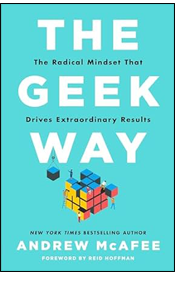 What was once an insult in the schoolyard, is now the cool thing to be - the 'Geeks' have inherited the earth...well, the business world in any case. The freak or the weirdo who was shunned in the past has now become the hero of the times. Not that the girls are attracted to this character but the money being made by these geek businessmen has made them the new heroes worth emulating. And, some with the messiah complex have made it their manifesto to save the world.
Andrew McAfee's book, The Geek Way, examines this transformation over the last three to four decades when the shy backroom boys have evolved into the new super-heroes who have driven away the marketing hucksters who have been in the limelight since the start of the industrial era. In doing so, he highlights a key point that Geek is not necessarily synonymous with Information Technology, though the digital version is the obvious poster boy (yes, note the gender) for this category. Instead, McAfee says that 'a Geek is somebody who gets obsessed with a hard problem and is willing to embrace unconventional solutions.' So, gender doesn't matter, industry doesn't matter, function doesn't matter, geography does not matter. What distinguishes a new age Geek driven firm is its culture and the book offers contrasting pictures of the old, conventional way of business with the new version where a different mind-set, a radical one to McAfee's eyes, is focused on delivering exponential results over the business-as-usual world of before.
Considering Maria Montessori as the patron saint of 'Geekness', McAfee plunges into an elaborate explanation of what it takes for leaders ('obsessive mavericks', in his words) to create a culture that he considers to be the Geek route to success. There are four cornerstones to this organisation: science, ownership, speed, and openness. Noting that these are not industry specific qualities, the book relates examples from multiple organizations - chiefly American ones - that have succeeded because of this heady combination. He advocates that success is a derivative of a culture that values curious minds coupled with an experimental mojo that tolerates iconoclastic behaviour, and autonomy to individuals, without an excessive premium for winning at all costs. A heady cocktail, you may say, but McAfee - proud of his Geek roots - offers you arguments drawn from history, science, philosophy and many other fields to illustrate that this is the one path that provides business success in today's world.
The realist that is McAfee, knows that wild competition is inherent to the capitalistic world of business. Without making any apologies for the brutal male chauvinistic world of Silicon Valley - the El Dorado of the Geek world - as evidenced in many sorry episodes of business chicanery, he doesn't delve in to moralistic positions to explain their success. Instead, he offers an explanation of the factors of culture through different studies, including one by the Sulls, Don & Charlie (Culture 500). It seems that an organisation that revels in openness is prepared for argumentative and heated exchanges so long as it is evidence based. That sounds like a world of rational beings - but that is an alien planet, not earth, where emotions have over-ridden lucid thought for centuries!
Overall, I would recommend the book - with its myriad examples and footnotes - as worthy of a read to understand how much the business world has changed since the decades after the Second World War. There is a new generation of employees out there (hang on, some don't even like to use that word, instead choosing the term, Associate) who are seeking meaning, purpose and autonomy, and see themselves as warriors rebelling against the tyranny of the earlier generation who have defiled the environment, by ruling it with iron discipline. The twenty-first century winds of change have introduced terms like 'quiet quitting', 'great resignation', etc., into the business lexicon, particularly in the post-pandemic era, and the Geeks have been at the forefront in this movement. And, this book explains the contrast from the earlier period in an excellent manner.
However, there are early signs that there is a backlash against 'wokeness' in some social quarters - and of late the business world has begun to face it too. Which begs the question to scholars like McAfee whether they are making much of a muchness by extolling the virtues of the Geek way. While there is no reason to fault his case, perhaps a pertinent question is whether this phenomenon will last. Some of the current stars of Silicon Valley now stand exposed and face close scrutiny with the backlash on the technology front. Besides, the rise of AI is also creating all round consternation. Call it the revenge against the nerds, but is the Geek way just another transitory phase in industry where American authors 'discover' old truths and bottle them under new labels? At times in the book, it did seem so, I admit.
back to top ^
|
|
| |
|
THROUGH THE LENS
|

|
|
This month, in-house nature enthusiast, Rupesh Balsara spots the Black-chinned Yuhina, a small songbird found in the forests of the Himalayas, particularly in Bhutan, India, Nepal, and Tibet. It typically forages for insects and small fruits in mixed-species foraging flocks, often found flitting through the canopy or hanging upside-down to reach its prey. Known for its melodious calls and intricate vocalizations, the Black-chinned Yuhina adds a touch of charm to its mountainous home. Despite facing threats from habitat loss and fragmentation, efforts are underway to conserve this enchanting bird and its fragile ecosystem.
|
|
|
|
Empowered Learning Systems
www.empoweredindia.com
101, Lords Manor, 49, Sahaney Sujan Park,
Lullanagar, Pune – 411040,
Maharashtra, India


|
 The ELS Lotus logo is trademark of Empowered Learning Systems The ELS Lotus logo is trademark of Empowered Learning Systems
©2024 Copyright Empowered Learning Systems (ELS). For private
circulation to clients and well-wishers of ELS. While ELS endeavors to ensure
accuracy of information, we do not accept any responsibility for any loss or
damage to any person resulting from it.
|
|
|
|
|
|
| |