|
|
|
|
| |
Dear Reader,
There exists a cadre of individuals who are catalysing change from the grassroots, often working behind the scenes to empower those who remain unseen in mainstream narratives. These unsung heroes are social entrepreneurs, the architects of innovative solutions that address pressing societal issues. Their focus extends beyond profit margins, as they strive to uplift the invisible contributors to our collective well-being.
One of the core tenets of social entrepreneurship is the recognition of marginalized and underserved communities that are often overlooked. These change-makers operate at the intersection of business and social impact, seeking sustainable solutions to systemic problems. Whether it is providing access to education, healthcare, or economic opportunities, social entrepreneurs are at the forefront of developing innovative strategies that empower individuals who would otherwise remain on the fringes of society.
As we navigate the complex challenges of the 21st century, the role of social entrepreneurs in empowering the invisible contributors cannot be overstated. Their work is a testament to the transformative power of combining business acumen with a deep sense of social responsibility. ET this month looks at 'Empowering the Invisible Contributors: The Role of Social Entrepreneurs'.
In the Thinking Aloud section, Jay underscores the need for broader societal support, overcoming prejudices, and fostering entrepreneurial opportunities for Persons with Disabilities (PWDs) beyond conventional employment. On the Podium, Thilakam Rajendran - Founding Partner & Director - NEDAR Foundation & ATPAR, explores the essence of social entrepreneurship, emphasizing its role in addressing societal challenges, advocates for sustained support and collaboration to foster its growth in India, highlights the transformative potential of technology, and introduces the NEDAR Foundation's impactful initiatives in empowering entrepreneurs, especially those with disabilities. In the We Recommend section, Jay reviews Eric Berger's Liftoff and Walter Isaacson's biography, Elon Musk which delves into Musk's unparalleled achievements, his unorthodox management style, and his ability to challenge established norms in various industries.
In Figures of Speech, Vikram's social entrepreneur toon soars to new heights!
As we start 2024, team ELS would like to wish our readers a Happy New Year!
Please also Click Here to check out our Special issue of ET, which is a collation of selected themes that were featured over the years highlighting the changing landscape of the business world. This special edition has been well received and can be Downloaded Here for easy reading and is a collector's item.
As always, we value your opinion, so do let us know how you liked this issue. To read our previous issues, do visit the Resources section on the website or simply Click Here. You can also follow us on Facebook, LinkedIn, X, Threads & Instagram - where you can join our community to continue the dialogue with us!
|
| Succeeding in Business: Nurturing Value in Family Business |  |
|
 |
As a counselor and trusted advisor, K. Jayshankar (Jay) offers practical insights in his book, drawn from four decades of experience. These insights are combined with conceptual elements to create a valuable primer for family businesses aspiring to succeed in the competitive marketplace of India. The book explores key factors driving successful growth in family businesses and addresses challenges related to generational transitions, value preservation, and the infusion of new ideas.
|
|
Click below to order your copy now


Special offer for Empowering Times readers. Get 30% discount by using coupon ETSPECIAL on the Notion Press online store.
Click here to connect with Jay.
|
|
|
|

|
|
A recent news item brought welcome news. Many organizations have proclaimed their desire to increase employment of persons with disabilities (PWDs) and some have set targets as high as 30% - Lemon Tree hotels, a pioneer in this arena, intends to achieve this number by 2026, double from their current 15%. With the Retail segment rising in India, it is good to note that many firms in this sector are ushering in this change in their employee profile. Interestingly, even the airlines sector is making strides in this regard with India's leading airline, Indigo, committing to raise their number of persons with disabilities by two-thirds in the next fiscal, many of whom would be in customer-facing roles. Whether this action is driven by sustainability and diversity goals or to score PR points is not really material – so long as there is genuine action on the ground.
While corporate India seems to be waking up from its slumber, there is another front that needs to be addressed. At a time when the new mantra on the business front is to become a start-up, this dream is also shared by PWDs. And, there is no reason to assume that business success cannot be achieved by such persons. An interesting sidelight is that there are several well-known individuals who have achieved fame despite their physical challenges. Two names that are globally prominent are Richard Branson (who has not allowed dyslexia to hamper him), and Steve Wynn, who has made his name not just as a hospitality mogul but also as the world's premier casino owner. Diagnosed in 1971 with retinitis pigmentosa, and declared in 2010 as legally blind, Wynn's career grew unabated with his gambling empire extending from Las Vegas to Macao. It was a series of allegations of sexual misdemeanours that finally derailed Wynn, not his blindness, and until his controversial exit, he had built a legendary career, and recognition for his art collection, besides acclaim as a philanthropist.
While the travails of battling social stigma and prejudice is one aspect that cannot be underrated in the world of PWDs, the bigger struggle is at a personal level, as has been testified by many such individuals. Family support apart, it is also important that other stakeholders in the society rise to modify structures that inadvertently become barriers to their success. With a plethora of schemes, the government through the social justice ministry and other bodies, has attempted to deal with the inequalities faced by PWDs. But this is not enough as the last mile challenge is a real one to connect and convert well-intentioned ideas into fruitful results. Across the country, many NGOs have made sterling contributions to bridge this gap, but they need the support of others who are in a position to play a constructive part.
I believe that industry can go beyond just providing employment to such individuals and even assist MSMEs run by PWDs. There is scope beyond mere CSR to promote enterprises that are created and managed by PWDs. This needs to be an active program for socially conscious firms, and greater recognition is merited to such companies. A few decades ago, the case for women's employment was actively on the agenda. The time has come now to modify the conversation to bring to focus the need for providing and assisting entrepreneurial avenues for PWDs. After all, in the words of Robert Hansel, 'There is no greater disability in society than the inability to see a person as more.'
back to top ^
|
|

|
|
 Thilakam Rajendran has been working in the disability sector for the past 33 years starting her career as a Special Educator in AADI (NGO) and later as the Managing Director of ARUNIM an initiative of National Trust, under Ministry of Social Justice & Empowerment, promoting livelihoods. She created a path breaking model for 250 producer groups with disabilities across the country through design innovation, market intelligence and
mentoring support to be seen as artisans & entrepreneurs with disabilities.
Thilakam Rajendran has been working in the disability sector for the past 33 years starting her career as a Special Educator in AADI (NGO) and later as the Managing Director of ARUNIM an initiative of National Trust, under Ministry of Social Justice & Empowerment, promoting livelihoods. She created a path breaking model for 250 producer groups with disabilities across the country through design innovation, market intelligence and
mentoring support to be seen as artisans & entrepreneurs with disabilities.
This strong quest to empower all persons with disabilities drove Ms Thilakam and her husband K.V. Rajendran to create a Social Enterprise - Alliance to Promote Abilities and Rehabilitation (ATPAR) in 2015 and also launched Network for Entrepreneurs with Disability for Assistance & Rehabilitation (NEDAR) - India's first ever business network for entrepreneurs with disability in June 2019, to become a collective voice for their business growth in the ecosystem which today has grown with over 150 member entrepreneurs across 18 states.
Sensing the acute need and lack of accessible inclusive incubators, she also registered - NEDAR Foundation as a Section 8 Company in 2021, which became the country's first 'Virtual Incubator' to promote & support micro entrepreneurs with disabilities to start- sustain -scale their enterprises. Together, Thilakam & Rajendran along with their team wish to see their vision for - economic empowerment, social inclusion & rehabilitation of entrepreneurs with disabilities & recognition of the 'Invisible Contributors' at par with other entrepreneurs in the country.
She was selected as an Unreasonable Fellow in 2011 in Boulder, Colorado, for her work in ARUNIM, recognized as one of the World's Best Social Enterprises. Additionally, she received the 'Most Innovative Projects in the World' award in 2013 from ZERO PROJECT, Vienna. In 2011, she was honoured with the NCPEDP-SHELL Helen Keller Award, acknowledging her role as a model professional promoting employment and livelihoods for persons with disabilities. Further recognition includes the title of Woman Entrepreneur 'ACHIEVER' by DMA (Delhi Management Association) in 2018 and the 'Leader of Change 2020' award from PVR Nest under the 'Collective of Leaders Program' for championing inclusion for the specially abled. The organization ATPAR, associated with her, was also awarded the Role Model Organization by NCPEDP-Mindtree Helen Keller in 2021.
ET: What is social entrepreneurship and how does empowering social entrepreneurs positively impact communities and social change?
TR: George Bernard Shaw said "The reasonable man adapts himself to the world; the unreasonable one persists in trying to adapt the world to himself. Therefore, all progress depends on the unreasonable man."
Social Entrepreneurs are those 'Unreasonable People' who break the mould to create a 'World for AlI' and deal with problems of everyday life with solutions which not just makes them entrepreneurial & create wealth for themselves but also the solutions they create better the quality of life & ease of living for many especially those who face with day to day challenges.
They aim for non-personal profits rather than a profit, and their primary objective of their existence is to serve the society rather than earning profits. They also innovate; their innovation is referred as "Social Innovation". Social entrepreneurs are not content to just give a fish or teach how to fish. They will not rest until they have revolutionised the fishing industry.
One of the most important needs of social entrepreneurship is towards the bottom of the pyramid of the population. Social entrepreneurship is the only way to fulfil the needs and demands for the bottom of the pyramid; this argument is the strongest for the existence of social entrepreneurship in India.
Empowering and encouraging entrepreneurs who work on social challenges is the need of the hour, as such start-ups bring huge mass impacts and contribute to the good of society through behaviour change, saving time & cost and creating jobs and adding to national wealth.
Social enterprises directly influence socially responsible business practices, such as corporate philanthropy, fair wages and green operations, or through independent business ventures initiated by non-profit organizations.
ET: What is your vision for the future of social entrepreneurship in India, and how do you see the landscape evolving in the coming years?
TR: Social entrepreneurship which focuses on working for the bottom of pyramid of the population has the ability to address a number of social inequities which are prevailing in India by offering solutions to long prevailing issues at affordable costs with greater reach. According to Start Up India notes, India has about 20 Lakh social enterprises and are fast growing with the use of technology.
One of the major challenges in India is ensure sustainable, affordable and qualitative service delivery in various sectors – health, education, livelihood, climate change, agriculture, social justice, social impact, disability, etc. – especially in rural and semi-urban areas. It is here that the opportunity has been found by social entrepreneurs and social innovators, which is leading to significant growth in the past few years. Different models have been adopted by social entrepreneurs – for profit as well as not-for-profit, and a number of them have been able to achieve a wide reach across geographies in the country.
However, the social entrepreneurship ecosystem requires the unwavering support of the established political and commercial institutions. With sustained enablement by Government and other stakeholders, social entrepreneurship could be a meaningful choice among all, especially the youth of India and can grow rapidly.
Also, social entrepreneurship are capital intensive, especially those which deploy technology and to become self-sufficient, would require adequate investment initially. With encouragement for impact investment and encouraging taxation regime, social enterprises can grow and sustain well over time.
ET: What role do you believe technology and digital innovation can play in levelling the playing field and providing equal opportunities for social entrepreneurs from all backgrounds?
TR: With the synergies of technology and digital innovation a new entrepreneurial genre which we call social-tech entrepreneurship has emerged in current times. A social-tech entrepreneur leverages technology not just to make parts of their operations efficient, but to prompt a disruptive change in the way a specific social problem is addressed.
Technology and digital innovation
- Enables qualitative service delivery at affordable costs with increased reach.
- Enables novel entrepreneurial approaches to social problems and provides innovative solutions which did not exist before.
- Enables consistency in approach enhances scalability across geographies.
- Does not discriminate on the basis of the background of the social entrepreneur and enables a level playing field for all social tech start-ups.
However, deploying technology at the heart of social entrepreneurship will need to be supplemented with on-ground capabilities for service delivery. Thus, social enterprises need to adopt to hybrid model to preserve their social mission and achieve their social impact goals.
A few areas where technology and research institutions can help unleash the potential of social-tech entrepreneurship:
- Experiment with new forms of capacity building: Public institutions and networks of social enterprises need to establish places of mutual and collective learning, where social enterprises and technology and research institutions exchange ideas and interact across sectors.
- Inaugurate a new generation of technology transfer policies: Universities and research institutes need to deliver on their mission of engaging with societal needs, and open up to new forms of social innovation-friendly activities and social impact objectives and successfully enable technological competences to pass onto other organizations.
- Support the impact investing industry: This should include smart regulation and measurement standards to guide the development of financial instruments and ensure that there is no trade-off against social value.
It is expected that a young generation of social-tech entrepreneurs is posed to turn societal challenges into inclusive growth opportunities for the social economy.
ET: As an advocate for social entrepreneurship, how do you collaborate with government bodies, businesses, and other NGOs to create a more inclusive and supportive ecosystem for marginalized entrepreneurs?
TR: In India, the disability sector has been depending on either Government schemes or NGOs. Mostly, the focus has been affordable rehabilitation support, basic education and skilling for jobs. However, when we consider that out of 1.3 Crore Persons with Disabilities (PWD) in employable age, about 1 Crore of them have been left behind from the job market, we need innovative solutions which are sustainable and scalable. World over as well as in India, a large number of those Left behind from the job market take to self-employment / entrepreneurship. However, they do not have access to entrepreneurial knowledge, skills, financial and market linkages or ecosystem support, making their enterprises neither sustainable nor scalable.
To address these critical gaps, our organization works to empower PWDs to start, sustain or scale their entrepreneurial journey. We collaborate with mainstream institutions like the National Small Industries Corporation (under the MSME Ministry) to provide MSME certified entrepreneurship skill training, incubation and accelerator programs and mentorship through incubators like Atal Incubation Centre – Birla Institute of Management Technology, sensitization and career counselling programs with the National Career Service Centre for Differently Abled (under the Ministry of Labour and Employment), marketing support through National Divyangjan Finance and Development Corporation for Exhibitions like Divya Kala Mela organized by MSJE across the country and financial linkages in the form of interest free returnable grant to the entrepreneurs through NGOs like Samhita Social Venture and other resource requirement for entrepreneurs like computers, assistive devices through a network of NGO / corporates and industry associations.
We sensitize and advocate for inclusive services and facilitate these institutions / organizations on disability related aspects to provide accessible services.
With our continued support and guidance, it has enabled their services to become more inclusive and accessible.
ET: Please share more on the NEDAR Foundation, and its role in empowering underprivileged and marginalized social entrepreneurs, especially those with disabilities?
TR:
The Need
Societal prejudices and lack of belief about how a PWD could be an entrepreneur has resulted in most entrepreneurial ecosystem players ignoring this particular social group. PWDs have also not been able to seek mainstream support due to their own hesitation, lack of confidence, lack of information and lack of understanding about how to build entrepreneurial skills and utilise services of incubators.
While mainstream incubators have also not facilitated and included the needs of micro or nano entrepreneur needs specifically addressing the following barriers of entrepreneurs with disabilities such as:
- Accessible incubators.
- Minimum qualification for eligibility.
- Optimised content and pedagogy.
- An exclusive business support network.
- Sustained hand-holding and mentorship.
- Connect to financial and market linkages.
- On-campus Incubation services.
- Rehab support and ecosystem engagement.
- Non-inclusion of PWDs in schemes promoting entrepreneurship (E.g. StandUp India, etc.).
Solutions
Based on the above challenges and the need for entrepreneurs with disabilities to become a part of the MSME ecosystem, NEDAR Foundation – a Section 8 Not for Profit Company - launched the first ever Virtual Incubator pan India, as a solution to promote and support both potential and current micro-entrepreneurs with disabilities for their economic empowerment, social inclusion and rehabilitation and bring these "invisible contributors" at par with other entrepreneurs. The virtual mode provides holistic, accessible and inclusive services while reducing disruption and loss of income to micro entrepreneurs through the following services:
- Sensitization & Awareness Creation.
- Enterprise Skill Development- Providing Online Entrepreneurship skills training to any literate using a simplified and practical content through Pre-incubation, Incubation and Accelerate program services.
- Providing structured online mentoring support to individuals, groups and specific businesses.
- Connecting to NEDAR business network which acts as a collective support group by providing members with business leads, networking with other similar businesses, getting regular mentoring support & new business opportunities, etc.
- By providing linkage to mainstream Exhibitions, Corporates Stalls and Ecommerce support and training for enhancing their market and brand.
- Preparing them for availing financial linkages and government schemes, etc. and connecting them to investors and funders.
- In addition to all the incubator services, NEDAR Foundation takes up advocacy and awareness for inclusion in the ecosystem along with Rehab support for independent mobility.
Journey so far since 2021
- Sensitized and created Awareness for over 1,200 PWDs / Family Members from across 22 States.
- Incubation and Entrepreneurship Development Training to 322 PWDs from across 22 States (including UT).
- Financial Linkages through Interest Free Returnable Grant – 142 Entrepreneurs.
- Market Linkages – including opportunities with Corporates – 110.
- Membership to NEDAR Entrepreneur Network - 210 Entrepreneurs from across 18 States (including UT).
back to top ^
|
|

|
|
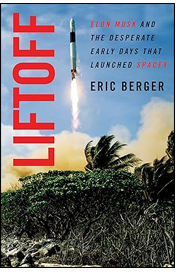 The blinding luminescence that radiates all round an exploding star is an image that came to mind when reading about the supremely complex life of Elon Musk. However, unlike the eponymous dying star, Elon Musk has been rising in orbit, from one project to another, and leaving behind in his wake many broken people and pieces. Here is a man, possessed with a vision to reach Mars in his lifetime, that he is willing to bludgeon everyone and everything in his path to attain his goal.
 Two books that capture this unique journey of a swashbuckling adventurer is at hand: Eric Berger's Liftoff and Walter Isaacson's biography, Elon Musk. The first time a book had attempted to convey this singular persona was Ashlee Vance's Elon Musk: Tesla, SpaceX, and the Quest for a Fantastic Future. But that was in 2015 when Musk was still considered a weird billionaire with stratospheric dreams. While Vance captured many facets of Musk's life in his best-selling book, the trajectory that his future life has taken was impossible to predict. But then, that is quintessential Musk. He has re-written the book on genius many times over, and one can safely predict that Isaacson's work is but a semicolon in describing the rare creature that is Elon Musk. Is he an alien? Funny to mention this, but Musk has joked about his being one, and if he was one, it is a case of Spielberg's ET heading home – in this case to Mars – and dragging the human civilization with him. Two books that capture this unique journey of a swashbuckling adventurer is at hand: Eric Berger's Liftoff and Walter Isaacson's biography, Elon Musk. The first time a book had attempted to convey this singular persona was Ashlee Vance's Elon Musk: Tesla, SpaceX, and the Quest for a Fantastic Future. But that was in 2015 when Musk was still considered a weird billionaire with stratospheric dreams. While Vance captured many facets of Musk's life in his best-selling book, the trajectory that his future life has taken was impossible to predict. But then, that is quintessential Musk. He has re-written the book on genius many times over, and one can safely predict that Isaacson's work is but a semicolon in describing the rare creature that is Elon Musk. Is he an alien? Funny to mention this, but Musk has joked about his being one, and if he was one, it is a case of Spielberg's ET heading home – in this case to Mars – and dragging the human civilization with him.
Musk has arguably achieved more in his 52 years than almost anyone in the last century, and this at a time when we have youthful billionaires sprouting all over the world. Isaacson portrays Musk's difficult childhood under a domineering and cruel father, and describes how Errol Musk, the father, still continues to haunt Elon in his life (genetically, financially, psychologically, and even in his nightmares). Escaping from a deprived childhood to becoming the richest man in the world is a tale by itself but Musk's distinctiveness lies in being prepared to wager all in his quest to 'save the world', his mission to Mars. Convinced that only he can prevent the destruction of humankind from catastrophe (be it man-made nuclear self-destruction or a cosmic event), Musk began SpaceX and at a breath neck speed built a firm that is the only one of its kind in the world, able to ferry people to space and back, safely in gigantic re-usable rockets. Winning NASA's contract saved the company from bankruptcy, the books explain, but for an in-depth account of the travails in the innovation journey that Musk ventured into, Berger's book has it all. The book presents the craziness that was inherent to this impossible mission and how Musk brought together a bunch of wildly passionate space freaks together, who were driven to their goal despite the bizarre behaviour of the leader, and who lurched constantly from one failed experiment to another in their endeavour to push the boundaries of physics to launch rockets, against all established norms and accepted wisdom. If ever you needed proof of Steve Job's words that 'Here's to the crazy ones. The misfits, the rebels, the troublemakers, the round pegs in the square holes, the ones who see things differently. They're not fond of rules, and they have no respect for the status quo…Because the people who are crazy enough to think they can change the world, are the ones who do', the intrepid builders of SpaceX would immensely fit the definition.
The best part about this zany crew is that they have changed the game. To Musk, anything is feasible, and he tackles every project with the same 'let's go to first principles' approach. Musk's maniacal zest to push boundaries led to 'surges', as Isaacson called it, when he tackled obstacles head on by unleashing the demonic version of himself. Brooking no resistance, demolishing all comers, he demanded (and more often than not) created new records in everything that he attempted. His famed five commandments algorithm was:
- Question every requirement.
- Delete any part or process you can.
- Simplify and optimize.
- Accelerate cycle time.
- Automate.
Using his tools, and leading from the front at every stage, he has created successful ventures: Tesla, SpaceX, Neuralink, The Boring Company, Starlink, and X.AI. And, there is more to come from his hyper-fertile brain.
Isaacson's tome is intimidating in size, but easy to read, as it is replete with anecdotes that present a fascinating man-child (his words) who will stop at nothing to achieve his goals, and is a multi-tasker extraordinaire. In a day he will work on three or four big projects from his varied stable of firms, and bring an intensity that singes people who fail to keep his pace. All this while maintaining tweet battles with others, be it competing billionaires (think Zuckerberg, Bezos, Gates), bureaucrats (including military), politicians (including Trump and Biden), or just the goofy ones who dare him with something insane. Provoked into buying Twitter for 46 billion dollars in 2022, a year later he has destroyed its (now known as X) value down to 19 billion at last count, but has astonished the doomsayers by keeping the firm alive and active after firing nearly 80% of its staff, and recasting its organization culture. And, did I mention that he has 11 children with three women, many with exotic names, as he believes (like his father) that he needs to contribute to increasing the human race. Musk's iconoclastic approach to life is also reflected in the way he has raised his children, as Isaacson discovered to his amazement, in particular the way the toddler X crawled about at project sites, rocket launches, etc.
Isaacson's track record of biographical works (on Jobs, Einstein, da Vinci, Franklin, etc.) are seminal but I find this work unfulfilling. Clearly, Musk is a difficult person to fathom, his motivations unknown even to his mother, Maye, and his brother Kimbal (both remarkable individuals in their own right). Offering his Asperger's condition is an easy cop out to explain his mood swings and demonic rage. If ever there was one who has married megalomania with sociopathic tendency, it is perhaps Musk. Isaacson's final words reflect his own perplexity: 'But would a restrained Musk accomplish as much as a Musk unbound? Is being unfiltered integral to who he is? Could you get the rockets to orbit or the transition to electric vehicles without accepting all aspects of him, hinged and unhinged? Sometimes great innovators are risk-seeking man-children who resist potty training. They can reckless, cringe worthy, and sometimes even toxic. They can also be crazy. Crazy enough to think they can change the world.'
Musk's fascination with the alphabet X continues. His latest venture X.AI will be making more news in the coming year as Musk's position on AI is different from his former friends at Google, OpenAI (which he cofounded), Meta, etc. At the Bletchley Park Summit on AI in early-November, Musk was his typical self, warning of the perils of AI while predicting a future where no jobs would be needed and everyone is paid a universal high income. But the visionary that is Musk has made it routine to bend the universe to his will. So, it will be foolish to rule out his words as puffery. Ask his competitors who have learned this hard lesson.
More excitement awaits this exceptional man, who grew up with science fiction, and is a perpetual gamer, and we can only wonder what he will do next as he pursues his desire to land in Mars in the coming decades, or die trying. For that, I will await Isaacson's next version on the incredible Ironman, Elon Musk.
back to top ^
|
|
| |
|
THROUGH THE LENS
|

|
|
Rupesh Balsara spots the Tricolored Munia, native to Bangladesh, India, Sri Lanka, and southern China. It is a small, sociable bird that thrives in wet grassland habitats. With a diet primarily consisting of grains and seeds, these birds display a brown plumage and pale-bluish grey bills in adulthood, adding to their visual appeal. The Tricolored Munia's charming presence and distinct features make it a delightful inhabitant of its natural environment.
|
|
|
|
Empowered Learning Systems
www.empoweredindia.com
101, Lords Manor, 49, Sahaney Sujan Park,
Lullanagar, Pune – 411040,
Maharashtra, India


|
 The ELS Lotus logo is trademark of Empowered Learning Systems The ELS Lotus logo is trademark of Empowered Learning Systems
©2024 Copyright Empowered Learning Systems (ELS). For private
circulation to clients and well-wishers of ELS. While ELS endeavors to ensure
accuracy of information, we do not accept any responsibility for any loss or
damage to any person resulting from it.
|
|
|
|
|
|
| |