|
|
|
|
| |
Dear Reader,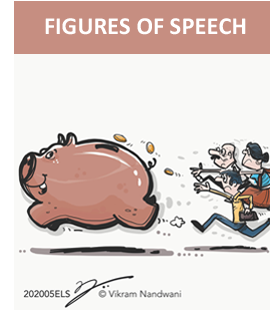
Chit Funds constitute one of India's oldest forms of banking. A Chit Fund is a product offering a savings and borrowing mechanism to the many excluded from the country's formal financial system. In 1982, the Chit Fund Act was passed to include rules under which these instruments could operate. However, with the rise of scams associated with the Chit Fund industry, it has, more often than not, left a bad taste in the mouths of investors looking for lucrative and flexible options to invest and reap benefits from these instruments.
ET this month looks at the 'Uniqueness of the Chit Fund Industry'. The introduction of the Chit Funds (Amendment) Act, 2019 has indeed instilled some confidence and hopes to attract attention of the Indian populace. This industry is also walking the extra mile in adopting technology, now offering the facility to invest and transact online, indicative from a number of fintech firms partnering with established chit fund companies and state Governments. All these steps continue to pave the way for more financial inclusiveness and a digital and technology-enabled economy.
To impress on the importance of this industry, Jay in the Thinking Aloud section, shares his thoughts of how Chit Funds have been in the shadows compared to other financial instruments. To enlighten readers, on the Podium, Sailaja Kiron - Managing Director at Margadarsi Chit Fund, shares her industry knowledge of the challenges of managing Chit Funds and the competition surrounding alternative financial investments. In the We Recommend section, we review Mind Master by Vishwanathan Anand (co-authored by Susan Ninan), which recounts the Grandmaster's love for chess and the learnings that came along the way.
In Figures of Speech, Vikram's toon highlights the common misconception surrounding the Chit Funds industry!
As always, we value your opinion, so do let us know how you liked this issue. To read our previous issues, do visit the Resources section on the website or simply Click Here. You can also follow us on Facebook, Twitter & LinkedIn - where you can join our community to continue the dialogue with us!
|
|

|
|
They also serve who only stand and wait.
The financial services industry is full of glamour boys (and women, now). Proud to be called Bankers - with the Investment Bankers and Private Bankers being the aristocracy amongst them - they have always received social respectability and have revelled in it. It is another matter that some of this celebrated tribe have repeatedly failed to be true custodians of other people's money, which in essence is what bankers are.
Also, the challenge for a large developing nation is the need for financial inclusion. Modern banking systems has yet not penetrated deep enough into the interiors to make many citizens part of the larger fabric of modern economic development. The larger banks have traditionally been hidebound in their practices as the need to stay competitive and generate substantial profits have been of paramount importance to the management who have felt a major accountability to their investors first and foremost. Financial innovations that emerged in the western banking systems (particularly, in the arena of corporate finance, for example leveraged buy outs, sub-prime mortgages, etc.) have largely been driven by the focus on raising profitability. The need in developing markets is different- for instance, creating innovations of micro-finance, etc.
The drive to generate the habit of savings in the masses has seen some unique traditional practices. One of those lesser acknowledged ones is the role of the Chit Fund industry in India. Sometimes reviled due to the sharp practices of some unscrupulous players, the positive role has not been sufficiently acknowledged. It is time to give the industry its due place of honour in the world of financial markets.
Chits are a traditional form of savings and have existed in various manner for well over centuries. Extremely popular in rural households, particularly in southern India, the model was to pool individual savings (money) into a common collection from which those who needed resources urgently could borrow at a reasonable charge. From this it evolved into an easy source of savings and borrowing for rural households and traders who needed sudden and urgent liquidity for their use, be it personal or work. Reportedly, there are over 10 to 15 thousand Chit Funds in operation across India, signifying their immense popularity in the hinterlands. As most of them are not registered and formal companies, the associated risks have also created opprobrium to this industry.
With the enforcement of the Chit Funds (Amendment) Act, 2019 from this year, the industry has been placed on a firmer footing than before. Plagued by scandals arising from unscrupulous operators (the recent ones from Bengal causing more public damage than before) the industry welcomed the amendments to the law as it gave it greater respectability. Sadly, the notorious cases of Saradha Chit Fund and Rose Valley Chit Funds did immense damage to the industry even though they were ponzi investment schemes masquerading as Chit Funds. Part of the challenge is also because the industry is not under the direct regulation of the Reserve Bank of India (RBI) or the Securities and Exchanges Board of India (SEBI). Governed by State laws, the operations depend a lot on the efficiency of the state machinery and only the registered Chit Funds managed by strong business houses are trustworthy. In the hands of fly-by-night operators, out to gain quick rewards with blanket promises of high returns, the small subscriber is exposed to huge risks. The larger, more established firms treat the subscriber's money as public money and consider it their fiduciary duty to manage the funds well enough to provide steady returns. Such firms have welcomed the new laws as they hope that it will provide greater degree of transparency and generate more trust in an industry that is attempting to modernize itself.
If you are wondering why Chits are still preferred over other financial instruments, the reasons are plenty. First, Chits by definition are flexible. The size of a fund can vary from Rs. 5,000 to Rs. 1 Crore. The unregistered ones in small towns offer great ease in joining with virtually no documents sought for verification - but then this exposes the subscriber to huge risks. The organized chit fund sector now seeks formal documents and sureties but makes it convenient to members as the monthly collection is primarily done at the doorstep. Besides, as the fund acts both as a savings and easy borrowing facility (through the monthly auctions), it is a very attractive option to a small or medium- scale entrepreneur (who does not wish to undergo the painful bureaucratic and impersonal banking process) to quickly secure a small loan for his personal or business use. Therefore, the primary reason for membership continues to be focused savings (children's education, marriage, housing, domestic repairs, business, etc.).
Lest you think that Chit Funds are a small town phenomena, it has a huge appeal to the middle class in urban areas too. In fact, the challenge today is more from the new generation of youngsters who have not understood the value of savings. Studies have shown that our national gross savings have fallen from 36% in 2007-08 to 30.1% last year. Of this, savings in Indian households has seen a major decline too, from 23% in 2012 to 16.3% in 2018. The rise of consumption has led to new pressures for the Chit Funds industry as the number of new subscribers have been falling annually.
However, the players who are forward looking are investing into a digital future for their businesses. Recognising the fact that younger customers in particular would prefer a digital interface and that technology can enhance customer service, and foreseeing the end of a cash economy, the larger and more forward looking firms are upgrading themselves into a fintech future and professionalizing their management which has been all along in traditional family hands. The Amended Chit Funds Act has also enhanced the management commission to 7% giving much needed leeway to the owners who faced the twin risks of defaults and dropouts of members. There is also an enhanced appeal that Chit Funds are sitting on a goldmine of customer information on small town India which could be extremely valuable. Hence, there is also a move to let these firms diversify into some fee-based activities (like selling third party financial products).
Clearly, many slow and silent changes are in the offing. Like in other fields, the firms who miss this evolution to the next generation are likely to fall by the wayside, while opportunity awaits the smarter ones. Yes, Milton was right, the silent and unglorified servants of the financial sector have been in the shadows for far too long, despite their yeoman service of inculcating the discipline of savings into the heart of India. Time to bring this to the fore.
back to top ^
|
|

|
|
 Sailaja Kiron is the Managing Director of Margadarsi Chit Fund Pvt Ltd. With a BA in Literature from Ethiraj College, Chennai and an MBA from PSG College of Technology, Coimbatore, Sailaja was trained to head her father's hatchery business in Chittoor, Andhra Pradesh. However, her life took a different turn when she got married to Mr. Kiron, son of visionary media baron, Mr. Ramoji Rao. Sailaja joined the family business in 1990, and became Executive Director at Margadarsi Chit Funds, the flagship company of the Group started in 1962. Apart from her other social ventures, she is also the Executive Director of Kalanjali, a project very close to her heart, which is the desired destination for ethnic wear and traditional wedding trousseau, and provides a special avenue for traditional craftsmen of India.
Among many awards, she was the recipient of the Hyderabad Women of the Decade Achievers Award for Excellence in Entrepreneurship from Assocham Ladies League in 2014. She was also conferred the Businesswomen of the year award in 2017 by Reliance broadcast network. The latest feather in her cap is an Award of Excellence by the All India Association of Chit Funds, Chennai.
ET: The Chit Funds business in India goes back nearly a century. What makes this industry a unique one?
SK: The Chit Fund industry has been the backbone of the Indian economy for over a century now. This is a mutual beneficial concept and enables members of a Chit group to help one another. The companies which conduct Chits are facilitators between the members of the group. Chits are unique instruments because it enables the person to either save or borrow when required. Basically, India is a saving economy and Chit Funds have played a major role in the making of it. Being a Chit member insists that you have to save monthly instalment amounts which are beneficial. If a person inculcates the habit of saving in Chits early in life, they are able to meet their financial requirements without borrowing at a high cost of interest from other sources.
ET: What are the challenges of managing Chit Funds?
SK: In a Chit Fund, the prize amount is disbursed every month to one member within a group of 40 to 50. Therefore, in a tenure of 40 to 50 months, the Foreman who runs the Chit Fund has the responsibility to recover the monthly instalments from all the members in the group and make the payments to the prized subscribers who discounted a certain amount to win the bid. This discounted amount is distributed among all the subscribers of the Chit Fund. This dividend amounts to interest earned for saving members. Therefore, the key challenge in managing a Chit Fund is to form a group with the right mix of members, out of which, some are willing to draw, and some are willing to save till the end. Most importantly, the recovery from every member promptly every month is the biggest challenge. Inspite of being very selective in enrolling members, sometimes one or two turn out to be defaulters. In order to overcome this challenge, the Chit Fund Foreman obtains proper security at the time of bid payments and if the member becomes a defaulter, the Foreman pressurises the sureties to convince the member to make the payments. Even after this, if the member fails to pay, we have no other choice but to file a suit for recovering the amount.
ET: The sector is facing competition from alternative savings/investment products, amid slowing growth of the NBFC sector. How will the industry fare in the next 3-5 years?
SK: Even though the banking industry is over a decade old, the Chit Fund industry has co-existed. While the organized Chit Fund industry is 10% of the overall Chit Fund industry, it will continue to co-exist for a minimum of 25 years if not for 50 years. Since people need money from various sources to meet their financial requirements, the industry will continue to exist. Good Chit Funds encourage the savings habit and therefore there will always be a market for it, particularly during periods of crisis, as we see today.
ET: In your opinion, how do Chit Funds drive financial inclusion in India at a time when Fintech seems to be the flavour of the season?
SK: Even today, it is the unorganized Chit Fund industry that is driving financial inclusions, even though there are some bad apples. It is safe and secure for people to join the organized Chit Fund segment as there is a guarantee for their money. Organized Chit Funds deposit money with banks and pledge the fixed deposit receipts with the Registrar of Chits equivalent to the Chit value. Essentially, when people join high value Chits, they should prefer organized Chit Funds as the amounts are large, and they should not take a risk. Fintech is a recent phenomenon and it is gradually growing just as Chit Funds have been growing. They will continue to grow along with banks and Fintech companies.
ET: As India's leading Chit Fund firm, please tell us more about your company, Margadarsi.
SK: Margadarsi Chit Fund Pvt Ltd was started in 1962 by Sri Ramoji Rao Garu. Today, Margadarsi has 107 branches operating in Telangana, Andhra Pradesh, Tamil Nadu and Karnataka. The company has crossed a turnover of Rs.11,000 crores and we have serviced about 60 lakh subscribers over the years. Margadarsi is the largest Chit Fund company in the country whose objective is to be the best and fastest pay masters in the industry. Margadarsi is known for its financial integrity and excellent services to its subscribers. Being a member in Margadarsi is like being self-sufficient. It gives you the confidence to plan finances without any hindrances.
back to top ^
|
|

|
|
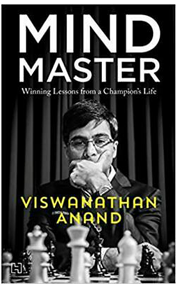 "There was the point at which I knew that the transition from being a strong player to becoming a champion wasn't going to happen on its own. I had to want it ardently enough."
- Viswanathan Anand
Speak out loud, "Chess" and the first name that comes to mind for any Indian is Viswanathan Anand. Released on his 50th birthday in 2019, the five-time world chess champion chronicles his most illustrious moments in his chess career and pens down some of the important lessons learnt along the way.
The tone of the book reflects his ardent love for the game of strategy and his obsession with achieving success. To accomplish life's biggest goals, according to Anand, one needs some degree of obsession. India's first Grandmaster gives readers a feel of his wins and losses, the strategies he used while competing with chess legends and how he coped with disappointments to stay in the game. He reflects on the fact that for any sportsman, it is very difficult to be unemotional when a lot is at stake in a competition. However, on introspection, Anand offers a solution. Every person or sportsperson, over the years, can detect certain patterns when one is apprehensive and the way they react to emotions. He admits that although easy said, it is important to find a strategy and take control of these emotions.
In life, as in chess, learning must be constant. This process will involve some amount of unlearning and learning; although the former is the hardest, it is necessary to grow and succeed. The adage "practice makes perfect" is close to Anand's heart. According to him, preparation is essential for any strategy to be effective. Also, constant and objective self-critical analysis is important to have an accurate picture of who you are, what your strengths and weaknesses are and what are the things you need to move forward. To achieve heights, it is imperative to force yourself out of your comfort zone, take risks and sometimes walk the counter-intuitive path, but not without owning responsibility for the consequences.
Susan Ninan has done a brilliant job in co-authoring this book. She is a sportswriter with ESPN and is based in Bengaluru. A must read for any sports fan, the book is simple and easy to understand. At the end of each chapter, Anand discusses some technical elements of the game briefly which might require some basic knowledge of chess.
Anand was recently named as the new Ambassador for World Wide Fund (WWF) India's Environment Education programme. Currently stuck in Germany, the former world champion and five other leading Indian players competed in an online chess exhibition on 11 April to raise funds for the country's fight against the pandemic. With the world staying safe and indoors, Anand is hopeful that online chess will become relatively bigger and capture the interests of many people who would like to try their hand in this game of strategy. The chess coach is also optimistic that once the world checkmates Covid-19, there will be structural changes in the world of chess going forward.
back to top ^
|
|
| |
|
THROUGH THE LENS
|

|
Our in-house nature photographer, Rupesh Balsara captures a picture of the Golden-fronted Leafbird (Chloropsis Aurifrons), which is one of the four species of Leafbirds found in India. This particular breed prefers wetter regions with evergreen and deciduous forests and feeds on fruits and nectar. Its breeding season is from May to August.
|
|
|
|
Empowered Learning Systems
www.empoweredindia.com
101, Lords Manor, 49, Sahaney Sujan Park,
Lullanagar, Pune – 411040,
Maharashtra, India


|
 The ELS Lotus logo is trademark of Empowered Learning Systems The ELS Lotus logo is trademark of Empowered Learning Systems
©2020 Copyright Empowered Learning Systems (ELS). For private
circulation to clients and well-wishers of ELS. While ELS endeavors to ensure
accuracy of information, we do not accept any responsibility for any loss or
damage to any person resulting from it.
|
|
|
|
| |