|
|
|
|
| |
Dear Reader,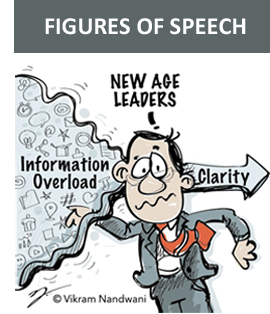
What defines the 21st century leader? In an era of business uncertainty, the role of a business leader is an evolving one. ET this month throws light on Business Leadership Demands for a New Era. In a business environment mixed with complexity and technological disruptions, it becomes imperative that new leaders take on an adaptive role. Concepts such as transformative, social and self-leadership are in the limelight. On the Podium, Leadership Coach, Sudhanshu Palsule elaborates on how the leadership function has evolved over the years. He also throws light on how the principles of quantum mechanics have helped in building effective 21st century organizations and teams!
In the Thinking Aloud segment, Jay questions the textbook definition of leaders and drives home the message that leadership today has certainly come a long way. In the We Recommend section, Jay reviews former McKinsey Chief Rajat Gupta's memoir, Mind without Fear. Krupali Bidaye, in the Voices segment looks at the history of transgender persons in Indian politics.
In Figures of Speech, Vikram's rendition of today's overwhelmed business leaders!
As always, we value your opinion, so do let us know how you liked this issue. To read our previous issues, do visit the Resources section on the website or simply Click Here. You can also follow us on Facebook, Twitter & LinkedIn - where you can join our community to continue the dialogue with us!
|
|

|
|
Are the corporate models of leadership contrary to the real political world of our current times? It does seem so when you see the major political voices of our times drowning the 'soft touch', 'servant leadership' ideas that are often touted as the right thing to do in corporations. Howsoever much you try, I am not sure whether Putin, Trump, Xi, Erdogan, Duterte, or even our own Prime Minister, would pass the Servant Leadership muster. Yet, these are the political giants of the day whose dictates and writs cover the largest population masses of the world. Those with softer outlooks have been brutally steamrolled over one by one and the few that remain (Merkel, Macron, Trudeau, etc.) are fading voices in the wilderness.
All this begs the question: did we get lulled into thinking that gentle, participative, dialogue-oriented leadership styles are suitable in the post-industrial world where supposedly knowledge workers respond to rational conversations? Or, at heart we still respond emotionally to the charismatic leader who sways us with his passionate pitch by deftly pushing some latent primitive buttons in our psyche that generates fierce loyalties to get us to deliver on his agenda?
Much against my better judgement, I am tempted to state that the rational man is a myth that we have created in the hope of peaceful co-existence. While in the industrial age we answered to the call of leaders who controlled the mechanical and physical resources that provided us with the means of domestic comfort, the reality is that this has not changed much even in the digital world of this century. With the rising threat of obsolescence, a new kind of barrier is getting created: a digital distinction between the haves and the have-nots. Consequently, the fear of irrelevance is real in many aging industries where the tsunami of technology is a looming threat, not visible yet, but never far from the minds of these coastal dwellers on the fringes of the work sphere. Witness the concerns of the traditional engineering sector firms who know that manufacturing 4.0 not only means greater productivity but could mean lesser labour.
At such volatile times, people hark to the call of the Great Leader who offers grandiose visions and a promise of good times. Even when they do offer solutions, implementing the change strategy needs strong and quick execution. The common belief is that we can generate buy-in through various consensus building steps involving series of participative conversations. Ideal though this maybe, there is a real threat of this being reduced to endless rounds of discussions focused on the minutiae at the cost of the big ideas. Plus, the reality of lost time, when patience is at a premium. Even in the largest and most successful of business firms, the strong shadow of the Company's CEO cannot be ignored. The overwhelming presence in the Board room of this leader usually means that his will overrides all others in decision making. Dissent is rare and muffled at the source unfortunately. Only after their grand fall, do others emerge. The latest case in point is the former poster boy of the global Auto Sector, Carlos Ghosn, who was seen as the knight in shining armor who rescued sick Japanese firms and nursed them back into international reckoning. His bold steps did restore fortunes of both French and Japanese firms and they survived the aggressive missives of the German and American competition. There is a paradox in management literature (magazines in particular) that we need to be aware of. Ideas like 'humble service', 'social awareness', 'empathy', etc. are touted as key characteristics of the soft and democratic leader but one forgets that what is most needed is effective action. In fact, the bottom line of leadership is effective action to deliver results. Too often in today's world where niceties are constantly demanded, we forget that leaders are chosen and ultimately tasked to get answers to difficult and convoluted situations. The ability to make tough calls is vital in such complex situations - though historians tend to view this with simplistic lenses. Hence the appeal of strong leaders who promise to get your break-through results quickly. Is it time to accept reality and accept that the textbook leader is fiction: interesting to talk about but missing in real life? That's a poser that needs to be examined deeper.
back to top ^
|
|

|
|
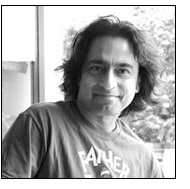 Sudhanshu Palsule is an award-winning educator, CEO Advisor and leadership coach, regarded as one of the leading thinkers in the fields of Complexity and Transformative Leadership. He is a Senior Associate at the Moller Institute, Churchill College, University of Cambridge and an educator at Duke Corporate Education, USA.
His work on leadership brings together the latest research emerging from neurology and psychology, and his own exploration of human thinking and behavior over thirty years. His current research and work focus on building effective 21st century organizations and teams that can thrive in increasingly complex global eco-systems.
Palsule's notion of "Self-Ware"- the program of thinking, emotions, and beliefs that drives us - remains central to his work on leadership. His work on building a leadership mindset has been successfully used in many organizations globally, enabling teams and their leaders to operate at higher levels of cognition and awareness.
Sudhanshu's new book, "The Social Leader: Redefining Leadership for the Complex Social Age" was released in September 2014. He has written several other books including Managing in Four Worlds, The Ecology of Organizations, Personal Growth and Science, Technology, and Social Change. His new book, "Rehumanizing Leadership" will be available in October 2019.
ET: As a keen observer of the business world , do you think that the leadership function has evolved over the years, and if yes, how?
SP: This is a very interesting question. On the one hand the answer is avowedly a yes. Global information flows, massive digitalization, a new millennial demographic, and the emergence of complex global problems, are four key factors that are together challenging what I refer to as the 20th century leadership model. The 21st century environment is far more complex, interdependent and emergent. This demands a very different approach to leadership, one that is no longer reliant on the single leader who exogenously solves our problems. The 21st century model is about leadership that emerges where and when necessary, and not necessarily within established hierarchies.
However, on the other hand, if you look at the political landscape across the world, we seem to revert back to nationalism and protectionism. The rhetoric is all about divisiveness and aggression, which is a far cry from the 21st century leadership model of collaboration and eco-systemic leadership. There are two reasons for this: one, politics and governance are always the last to change and they operate in slower time-frames; two, before any big change happens the old paradigm always puts up its defences and what we are witnessing may be the last gasp of the old power structures.
ET: As a trained physicist, how do you use the principles of quantum mechanics in building effective 21st century organizations and teams that can thrive in increasingly complex global eco-systems?
SP: Quantum physics provided us with a participant-centered narrative. This means that reality is not something "out there" as an objective entity; rather it emerges through our participation. This is exactly what the thinker and educator, J. Krishnamurti meant when he said, "The observer is the observed". We bring forth our reality. This is in direct opposition to the objectivist view which suggests that reality is independent of our thoughts and actions. The same view is borne by the new biological sciences which demonstrate that life itself is an emergent reality, in that life allows for life by sustaining the conditions for life! Every single bacterium and every tree in our eco-system is part of this logic of life. Pick up a handful of soil and it is teeming with millions of micro-organisms that are working overtime to sustain the climate conditions of the planet. Why are they doing it? That is precisely the logic of life, which is essentially what quantum physics discovered in the previous century.
This quantum (or ecological) logic has massive implications for our societies, our organizations, and for our leadership. Participant-centered leadership in eco-systems has a very different meaning from the meaning that comes from an objectivist perspective. First and foremost, everyone in an organization is responsible for the organization; secondly, we are continually "bringing forth" our organizations through our conversations, actions, and behaviors. That means that problems do not exist "out there". Rather they are the product of how we relate to what is happening out there. Leadership then, is as much about transforming our conversations, actions and behaviors, as it is about transforming our organizations and societies!
ET: What are the essential qualities needed by business leaders in this new era where politicians seem to have opted for the 'strong man' leader model?
SP: As I mentioned earlier, the "strong man" model is a backlash to the massive changes going on externally in the 21st century. We are transforming from a predictable and controllable world of hierarchies and vertical power to a networked one in which information is a commodity and access is more important than assets.
To stay relevant and significant, leaders must learn new cognitive tools and behaviors that are about the following four critical factors:
1. Learning to thrive in ambiguity
2. Developing the ability to adapt and collaborate
3. Operating with a mindset of mindfulness
4. Inspiring others through authenticity and purpose
ET: What is your advice to the 21st century leader to adapt to constant disruption in the business world?
SP: To address these requirements, leaders demonstrate generosity and empathy; remain curious, practice humility and remain open-minded. I playfully refer to this as your Generous Echo.
And finally, they will need to operate from a powerful purpose. What concerns me most is attention, and the way we are squandering it. Attention is going to become the most precious resource of the 21st century.
ET: As a leadership advisor to top management teams and CEOs, across the globe, what is your advice to our readers in avoiding the common leadership mistakes?
SP: Welcome to the 21st century: an age of complexity and turbulence where continuous disruption is the norm; where information is no longer a source of strategic advantage, and where agility is fast replacing every other parameter of business success. This complexity is the result of multiple, and apparently unrelated factors, that are colluding in unpredictable ways to create conditions in which old solutions no longer seem to work as effectively as before. Globalization, digital technology, socially created information, and a new demographic are creating a new environment that demands new ways of thinking and leading, and new ways of fostering innovation at the workplace. It is no longer possible to solely rely on old ways of running our organizations, and leaders have to learn to thrive in a new complex landscape. Not since Gutenberg's invention of the printing press in 1899 has there been a more momentous inflection point in history. The impact is going to be massive. Most of our leadership theories are largely based on the image of the leader as a general leading "his" troops in a planned, predictable world where instructions are obeyed, and strategy is king. So much of the 21st century bears little resemblance to a time when linear solutions worked. In a complex world of multiple, convergent causes and unforeseeable discontinuities, leaders have to learn to think and respond differently. So, what are the challenges specific to the 21st century? For one, our organizations are being driven to act more like networks than hierarchies. Secondly, our organizations are under scrutiny from employees, stakeholders and customers who possess three unprecedented resources: ubiquitous access to social information; an expectation that they can engage anyone and everyone in conversation and shape the point of view of the community; availability of cheap and fast communication that allows them to react to events in real time. In reality, the "general" has very little control left.
back to top ^
|
|

|
|
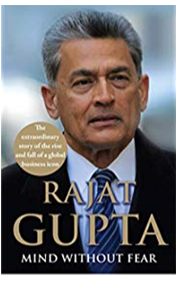 Picture a consummate professional advisor who is in great demand across the globe. Living from one assignment to another, travelling across the globe, sought after by the largest corporations and the most influential corporate leaders. And there is more: outstanding educational pedigree, playing the prime mover's role in multiple organizations for major global causes like Health & Education, a name that is recognized across sectors, etc. You name it - and he has done it.
Until it all came to an end. Starting as a bad dream when he got an unexpected call from the Goldman Sachs attorney as he was about to board a flight, Rajat Gupta saw his entire world crumble slowly through an excruciating legal process that unravelled his entire professional persona as well as his personal world. The flameout received extensive media coverage around the world and is now a case study in business ethics and insider trading. But interestingly the world did not hear his version - until now. 'Mind without Fear', is Rajat Gupta's untold story in his own words. A good cover-up you might say if you take the position that he was tried in court and took recourse to multiple appeals (all the way to the Supreme Court) that failed at every level. However, you might change your mind if you accept Gupta's version which he offers persuasively through these pages.
It is a cliché that you become aware of your true friends when you are deep in trouble and Gupta too testifies that suddenly many of the high-and mighty professional colleagues and old friends vanished when he needed them most. Yet, some continued to believe him and offered testimony to his illustrious contributions in various sectors (business, social, education, etc.) and his personal character (that he was gentle and generous and had played transformative roles in many people's lives - including the life of the son of the man who fatally deceived him, Anil Kumar). Those who remained steadfast by his side included Bill Gates, Kofi Annan, Pramath Sinha, Mukesh Ambani and a host of Indian businessmen who had witnessed his social conscience in action.
The book is also an attempt to make up for Gupta's primary and major regret during the legal battle: that he failed to take the stand in court to present his version. He agonized over this decision: the lawyers (who kept insisting 'don't worry') had good reasons to advice against taking the stand given the risks involved and painted the worst-case scenario so well that they played to the fears of Gupta's family. That was the crucial element that made Gupta over-rule his desire to speak openly in court - a decision he regretted everyday in jail. This book is his delayed and desperate attempt to set the record straight by narrating his life story.
What comes through is the story of a young man who shouldered responsibilities from his teens, taking charge of his siblings after losing his parents, excelling in academics, constantly expanding his professional horizons by climbing the hitherto unknown heights of global business echelons for an Indian in America. This was the result of single-minded devotion to his profession coupled with his tremendous ability to persuasively network across new sectors and come up with innovative answers to client needs. Not only did he guide McKinsey to the new digital world as it emerged in the nineties, he also marshalled its global expansion making the brand unassailable in the competitive consulting landscape. Therefore, it is with much pain and regret that Gupta speaks of his departure from The Firm and becoming a persona non grata within its hallowed ranks.
Two others who are presented in poor light are Llyod Blankfein (Goldman's Chief Executive then) and Gupta's nemesis, Preet Bharara. Bharara went after white collar crime on Wall Street with a vengeance never seen before. Given the turbulent emotions of the period (Occupy Wall Street movement, the collapse of the financial sector and ominous clouds over capitalism, etc.), there was a raging blood lust against the haves and the well-heeled who seemed to have gained at the cost of the middle and working classes. Bharara led the charge and in Gupta's version went after him as he found Gupta to be an easy and a very high-profile target. Through sharp legal tactics, including obfuscation of facts and stonewalling relevant evidence, and bullying witnesses to turn approver against Gupta, Bharara succeeded in converting Gupta's relationship with Rajaratnam's Galleon Funds into an illicit Insider Trading deal. While admittedly no benefit ever accrued to Gupta, he became the poster-boy of corporate corruption in the eyes of the media and perhaps this influenced the jury during its extremely short deliberations at the end of the trial. The trial itself was tightly controlled by the Judge who not only took pot-shots at Gupta at various times but also blocked any testimony which would paint Gupta in kind light. No 'Mother Teresa defense', ruled the judge, throwing out any opportunity to show that Gupta had never put his interests above his clients or others. Gupta, therefore, maintains that a 'cropped portrait' was presented to the jury.
So, why did this happen then to Gupta? Clutching his copy of the Gita during his harsh days in solitary confinement he sought inspiration from his father's life journey, the words of Tagore and the wisdom offered by the holy book. Replaying his actions over and over in his mind, he considered this to be his Karmic cycle. That's an easy answer to his plight, to my mind. Were there character flaws too that contributed to his downfall? Well, none of us is perfect. For all his managerial acumen, Gupta admits that he was not assertive enough with Rajaratnam. One wonders how Gupta fell to the fatal charms of the hedge fund wizard, and the conniving and ingratiating Anil Kumar who was his protégé. Perhaps a combination of greed and hubris? What is evident is major judgement errors, not just his naivete in trusting others but also a blind faith in the judicial process and accepting his lawyer's 'don't worry' advice. For all his brilliance, he failed miserably when it mattered most and suffered severely for these lapses.
Gupta is in his seventies now. Released from prison, he is now on a path to redeem himself. His massive rock of support right through the days of ordeal was his wife, Anita, and his four daughters. It appears from Gupta's version that he was hard done by the judicial system and various twists of fate. His book mentions that if only he had heeded his wife's words in time, all this would perhaps have been avoided. But that is history. Be that as it may, don't write him off yet. Given his many talents, there is a lot he wants to contribute to society and am sure we will hear more from him, particularly in India.
Let me end on an ironic thought. At the height of the scandal, the press picked on Prof. Bala Balachandran's comment, 'I told him once if you are in a herd of pigs, you'll also smell like a pig'. Well, those are wise words for all of us, isn't it? Not sure what Gupta's response to the professor was. Suffice it to say, on another day, this may well have been Gupta's advice to his client.
back to top ^
|
|

|
|
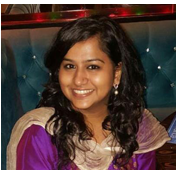 India's political waters are changing. Big news of this year was Apsara Reddy, a former journalist and transgender activist, was appointed as the General Secretary of the Mahila Congress, which is the Congress party's women's wing. Back home, Priya Patil, another transgender activist was appointed as the State Representative of the Nationalist Congress Party. While all over India transgender persons continue to fight for basic rights, including right to have identity documents in their preferred gender identity and also right to vote; this move of two of the national parties was encouraging, echoing political wisdom, and trying to capture the new wave of change that New India stood for rather than just a populist move. In this section, this month as India voted for a new government, we trace back the history of transgender persons in Indian politics in the context of their rights and aspirations. India's political waters are changing. Big news of this year was Apsara Reddy, a former journalist and transgender activist, was appointed as the General Secretary of the Mahila Congress, which is the Congress party's women's wing. Back home, Priya Patil, another transgender activist was appointed as the State Representative of the Nationalist Congress Party. While all over India transgender persons continue to fight for basic rights, including right to have identity documents in their preferred gender identity and also right to vote; this move of two of the national parties was encouraging, echoing political wisdom, and trying to capture the new wave of change that New India stood for rather than just a populist move. In this section, this month as India voted for a new government, we trace back the history of transgender persons in Indian politics in the context of their rights and aspirations.
Back in 1999, Katni in Madhya Pradesh, elected India's first transgender Mayor, Kamla Jaan. "No car, no house, Kamla belongs to everyone," was one of her campaign slogans. While Kamla came out victorious by around 1,500 votes ahead of her competitors, her candidature for the election came to be questioned in the court. The Sessions Court in Katni ruled that Kamla was a man and had no right to occupy a seat reserved for a female candidate as a part of the quota system. Despite this dismissal, Kamla proved to be a popular leader.
Later, in the year 2000, Gorakhpur, in Eastern Uttar Pradesh, elected Asha Devi from the Kinnar Samaj as its Mayor with over one lakh votes. But this progressive move by the people was dismissed by a petition challenging her candidature questioning her 'ambiguous' gender identity. And then later in 2009, Kamla Kinnar who came to be elected over her competitor from Bharatiya Janata Party from a district in Madhya Pradesh faced a similar fate.
Hon'ble Supreme Court's National Legal Services Authority (NALSA) judgement, April 2014, brought in a sense of belonging for the transgender persons' community, and was revolutionary in letter and spirit, and laid down that 'gender identity' was a choice and was independent of biological gender. In the background of the NALSA spirit contagiously spreading in the civil society, giving impetus to the LGBT movement across India, in a small sleepy district in Raigarh, Madhu Bai Kinnar (identifying as a transgender person and also belonging to the Dalit community) got elected as Mayor in 2015, defeating a strong candidate. Contrary to previous cases, Madhu's candidature has been widely accepted and she still continues to hold the political post and works with the masses. The NALSA judgement definitely has a great role to play in this; one, that it categorically shifted the perspectives of understanding 'gender identity' and second, it became a call for a change in societal attitudes.
In Mumbai, Maharashtra, Priya Patil the first transgender person who contested Municipal Corporation elections in 2017, faced defeat. In another scenario in the same year, Dyaneshwar Kamble, another transgender person from the Jogti community was elected as Sarpanch, from Tarangfal village, Solapur. While Madhu Kinnar's victory had made a good start, continued by few isolated attempts for political representation, it had laid grounds for big political announcements and also transgender persons being fielded by political parties for contesting the big day politics, a Lok Sabha seat. The Aam Aadmi Party fielded Chirpy Bhawani as its candidate from Prayagraj in Uttar Pradesh, and South Mumbai constituency had Sneha Kale, a transgender woman contest independently. While both of them faced defeat, it was a revolutionary move in the history of Indian politics and the transgender rights' movement.
A lot could be credited to the NALSA judgement, the civil society activism that has picked up in recent years in India, the effect and influence of social media, and the rising awareness in the trans community about their rights and entitlements, supported by LGBT movements across the world. The Transgender Persons Bill, 2017 (that was passed by the Lok Sabha and awaits its passage in the Rajya Sabha), also created a strong media stir. Many progressive parliamentarians made effective interjections and arguments to strengthen the Bill. However, in this background, a loose statement made by former Hon'ble Minister of Women and Child Development, Government of India, Maneka Gandhi, regarding her confusion to address transgender persons as 'he' or 'she' or 'others' and the chuckle that followed, brings to the fore the hollow understanding of the term, ignorance surrounding it, and the utter disregard to dignity of individuals, by the Government. Such instances become detrimental to the environment of acceptance and inclusion being created by the legal systems otherwise.
Despite political representations, elections, electoral rights, etc., what is crucial is the sensitisation that is needed across the political parties, parliamentarians and government functionaries to open up and understand 'gender diversity' and bring difficult subjects on the discussion table. Without appropriate understanding of 'gender diversity' in its entirety and the sensitisation of the same, one cannot expect the Government to accommodate the voices of diverse sections of the trans community. Even then, with support of many progressive parliamentarians, the promises for social inclusion made by various political parties in their election manifest, one can expect that they would stand by them to let the Transgender Persons Bill 2017 - that shall echo aspirations of the diverse transgender community - see the light of the day.
back to top ^
|
|
| |
|
THROUGH THE LENS
|

|
Bird watcher, Rupesh Balsara captures a shot of the Spot-winged Rosefinch, primarily found in India and Nepal. Its natural habitat are sub-tropical or tropical high-altitude shrublands, and they mostly feed on small seeds.
|
|
|
|
Empowered Learning Systems
Pvt. Ltd.
www.empoweredindia.com
101, Lords Manor, 49, Sahaney Sujan Park,
Lullanagar, Pune – 411040,
Maharashtra, India


|
 The ELS Lotus logo is trademark of Empowered Learning Systems Pvt. Ltd. The ELS Lotus logo is trademark of Empowered Learning Systems Pvt. Ltd.
©2019 Copyright Empowered Learning Systems Pvt. Ltd. (ELS). For private
circulation to clients and well-wishers of ELS. While ELS endeavors to ensure
accuracy of information, we do not accept any responsibility for any loss or
damage to any person resulting from it.
|
|
|
|
| |