|
|
|
|
| |
Dear Reader,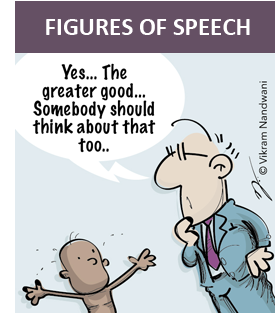
World Autism Awareness Day which is celebrated on 02 April every year highlighted the need to help improve the quality of life of those with autism so they can lead full and meaningful lives as an integral part of society. Global organizations such as the UN will no doubt continue to serve this and other causes. However, the need towards working for a social cause is gaining importance in India Inc. wherein corporates are playing a pivotal role in addressing social issues.
While we have a long way go, it is not only corporate India that is playing a part. Socially conscious individuals are coming together to create bodies that can address issues on their own initiative. Recognising that all answers do not (or cannot) lie with governmental bodies, there is a growing number of well-meaning citizens who are shaping society by undertaking the responsibility of building social institutions. To this end, they not only raise funds but also devote a large amount of their personal time to shaping such bodies to deliver its mission. Such people have not only found a purpose for themselves but are leading purposeful lives by shaping social institutions. On the Podium, Dev Bajpai - Executive Director, Legal and Corporate Affairs, Hindustan Unilever Limited (HUL), elaborates on how a few parents came together in Mumbai to serve the society through their Charitable Trust - Organization for Autistic Individuals (OAI). He emphasizes that it is unfair to leave social roles to the government alone and it should be a joint collaboration of various stakeholders.
ET this month throws light on Building Social Institutions: The Leadership Challenge. In the Thinking Aloud segment, Jay drives home the message of the importance and the need of creating more social institutions. In the We Recommend section, we review Anil Rai Gupta's biography of his father's life in Havells: The Untold Story of Qimat Rai Gupta and the inspiring journey in building a well-known Indian electrical brand. Krupali Bidaye, in the Voices segment highlights the concept of human books at the Trans and Hijra Empowerment Mela 2019.
In Figures of Speech, Vikram's heartfelt rendition to serving a social cause!
As always, we value your opinion, so do let us know how you liked this issue. To read our previous issues, do visit the Resources section on the website or simply Click Here. You can also follow us on Facebook, Twitter & LinkedIn - where you can join our community to continue the dialogue with us!
|
|

|
|
The legendary Peter Drucker was one of the earliest to recognise that it takes good management practices to run any institution. 'Our society has become, within an incredibly short fifty years, a society of institutions. It has become a pluralist society in which every major task has been entrusted to large organizations - from producing economic goods and services to health-care, from social security and welfare to education, from the search for new knowledge to the protection of the natural environment', he wrote.
This is the reality of the world today and admittedly good management practices are now the hallmark of most well-known business firms. A close reading of Drucker's vast writings, additionally, will also reveal that the principles of management that he espoused have an equal application to non-profits, government, sporting organizations, etc. - verily, organizations of all forms. In fact, the larger the organization, greater the need to pay heed to Drucker's writings as he covered a wide arena of subjects, be it purpose, structure, style, etc. And, central to any organization, we would all agree is Leadership (in every way). Regrettably, there is a general consensus that on this aspect of leadership, there are gaping lacunae in the social sector.
By definition, the social sector - consisting of well-meaning Non-Government Organizations (NGOs), charitable bodies, social enterprise businesses, Grant-giving or Funding Agencies, Public Policy Think Tanks, etc. - are organizations with a heart. The founders, more often than not, started with the premise that doing good to others in need, was a soul-satisfying mission. As they grow in scale through the addition of greater scope and coverage of their work, they naturally add more staff and begin to understand that fund-raising is a major activity, however unpleasant a task this seems. Soon, issues of management arise and create organizational obstacles. Though this is often considered unnecessary bureaucracy, and therefore, resisted by many from the rank and file of the organization, the reality is that failure to address organizational issues of finance, working capital management, performance management, etc., can spell the doom of any organization. Refusal to address questions relating to efficiency of the organization is a sure recipe for imminent collapse as issues of effectiveness will soon erupt. This was highlighted by a research of the social impact of such firms and the chief causal factor was the lack of coherent leadership in such bodies.
Coupled with this issue are some other associated matters, chiefly governance and development of human capital. With large money resources now becoming available to non-profits and the social sector in general (both through CSR and philanthropy), there is also a growing demand for accountability at the senior levels. Without even going into the motives of the government that has in recent times begun to question the role of NGOs (particularly those who are seen as conduits of questionable foreign money), there are basic managerial issues that need examining. For instance, skill building is a key aspect that needs urgent attention. While one deeply appreciates that the there is much to be said about the personal motivation of volunteers in the social sector, there is no denying that lack of appropriate, adequate and contemporary skills is a major contributory factor in organizational atrophy.
A case in point is that today's workforce (even in the social sector) resonates best where the ethos of collective leadership and teamwork flourishes. This is a neglected aspect as many social sector organizations are founded by strong, charismatic leaders who attract star-struck or committed followers as the first wave of members but when such leaders fail to develop a pipeline of leaders who can either build and grow after the initial start, they end-up presiding over the ruin of the same organization that they built. As would be obvious by numerous failed organizations, social sector firms that refuse to invest in institution building by developing human capital are at great risk.
The other underinvestment is in technology. In a wired and networked world, one finds that the social sector has underestimated the role of technology. Not only does IT offer opportunities for creating speed and efficiency in operations but it also throws up avenues of mining data that would enable the non-profit to become more effective as it scales up, through better use of systems and processes. The lack of appreciation of the power of IT is an expensive error and needs serious rectification at the earliest in most organizations in the social sector.
The need to attract top talent cannot be understated too. Yet, this is one aspect that can be tackled in a relatively easier way. Of late, there is a burgeoning talent inflow into the sector. This comes from two streams: many professionally trained in social work are available now and there is a growing number of private sector professionals who wish to opt out of their old profession and who now wish to work in more socially meaningful areas. The bigger challenge is to retain the second set of professionals. While they may be willing to work at lower pay levels, what upsets them more is their frustration at the slower pace and often ad hoc decision-making process which is not uncommon in many older social sector firms.
What is the bottom line in this scenario? Irrespective of the problems & challenges involved, there can be no denying the fact that the social sector is a fertile sector for innovative managerial practices and is waking up to this reality. While it is not a sector for the faint-hearted, the purpose-based work has a huge appeal to many talented people now - drawn both from the idealistic young and the committed seniors who are carving out a second innings for themselves. Yes, the social sector is awakening to the power of leadership and management and the beneficiaries are the targeted constituencies. Consequently, we can look forward to the creation of many more social institutions independent of government succour.
back to top ^
|
|

|
|
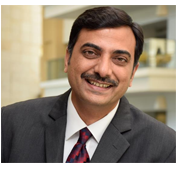 Dev Bajpai has been a member of the Management Committee of HUL since May 2010 and was inducted on the Board of Directors of HUL as a whole time Director with effect from January 2017.
Dev is a Fellow Member of the Institute of Company Secretaries of India and has a law degree from the University of Delhi. He completed an Executive Program for Corporate Counsels at Harvard Law School.
He has 30 years of experience in diverse industries that include automobiles, FMCG, hospitality and private equity, in the areas of legal, governance, tax and corporate affairs.
In the past, he has worked with Maruti Udyog Limited, Marico Limited, Indian Hotels Company Limited and ICICI Venture Funds Management Company Limited. He has been part of committees of apex industry organizations such as CII and FICCI. Dev has also represented the industry before parliamentary committees.
ET: You have played a significant part in creating a unique institution of learning. Please tell us more about it.
DB: In 2015, we set up a Charitable Trust called the Organization for Autistic Individuals (OAI). OAI was set up with the objective of supporting the cause of autism by providing to those who are on the Autism Spectrum Disorder (ASD), good schooling facility which could deal with the specific challenges that those on the spectrum face. The incidence of autism in our country has gone up manifold in the last thirty years. From 1 in 10,000 about thirty years ago, to 10 in 1,000 about fifteen years ago, we are facing a situation where the incidence is 1 in less than 100. Unfortunately, the commensurate scale-up in institutions to deal with this developmental disorder has not happened.
OAI, thus set up the School of Autism in Mumbai which today caters to about 25 students. Out of these, 6 belong to the BPL category and 3 from the economically weaker background. The School has silently but effectively gone about doing its job through a set of trained special educators and therapists including occupational therapists, music therapists, psychologists, etc. The School has registrations granted by both the National Trust established by the Government of India and by the Disabilities Commissioner, Government of Maharashtra.
The School teaches computer education, vocational skills, music, daily living skills, physical training and so on and so forth. Things that we take for granted come with enormous difficulty for those on the spectrum. The School has employed skilled and professionally qualified teachers and educators with a mindset of making a difference and passion for what they do. In the short period of four years, the School has made an impact and parents of almost all the students have noticed the difference that the School has made to the lives of their kids. Kids come to our School with different issues. They have different behaviours and are not able to grapple with the environment around them. The School has made them calmer and more attentive. The School is working to find out the special skill with which each of these students are endowed with and help the student become proficient in it. This is a big challenge and we are working to meet it.
The School wants to service more students who are on the spectrum and towards that objective, needs support from stakeholders.
ET: Autism is still an unknown aspect in India and more awareness needs to be created. Please share with us more on this subject.
DB: Autism is still not understood by people living in cities, so you can understand what the case in villages of our country must be. OAI has been, through its own initiative trying to build awareness. The fact that we set up the School for autism is itself an initiative to spread awareness. Autism has been recognized as a notified disability by the Government in the Regulation that deals with disabilities. We commemorate and celebrate World Autism Day and spread awareness in and around the School. But this is a huge task where all stakeholders both from the Government, the social sector and like-minded people have to pitch in.
ET: What are some of the leadership challenges faced in building social institutions?
DB: When you set out to do something that is meant for the society, you do face challenges and our experience has not been any different. When it comes to lesser known issues like autism, it becomes even more challenging. Firstly, inadequacy of infrastructure led us to get into this. Instead of endlessly waiting for some institution to come up, we thought that the best option is to create one. Whilst establishing the institution, one has to deal with several stakeholders from different walks of life and they view your issue with different levels of interest, motivation and priority. The disconcerting part is when one has to convince educated people on why it is important that we do this and get their support. On the other hand, there are some stakeholders who get it and walk with you and motivate you.
ET: What is your advice to business professionals to develop skill sets that make for an effective leader of today? Do you think they should have an active social conscience?
DB: Firstly, and, most importantly, have a "purpose". The purpose should not just be a piece of well written words but should be one that one lives every day. In short, not just have a purpose but be purposeful. Once you have a purpose, take actions to live that purpose. This may involve several things from skilling oneself, building sustainable capabilities, adopting oneself in the VUCA world. The other is encouraging people to be innovative and think out of the box. This is doable if one spares time to attend not just to "urgent" issues but also to "important" issues which may not necessarily be urgent. Having an active social conscience is a pre-requisite for good Leadership. Leadership is about the impact it creates and the number of people it positively impacts. One can be a great leader and lead the business to great heights, but leadership should be such that it creates a larger impact on the society through one's actions. Leadership should be a strong enabler for unlocking growth for sure, but that growth has to be not just profitable but also responsible.
ET: In your opinion, what role can corporate India play in building social institutions? Or, should this be best left to government?
DB: Corporate India is playing a key role in building social institutions and programs and can play an even more significant role. It will be incorrect for corporate India to leave this only to the Government which is, thankfully, not the case. Corporate India has a significant role in changing behaviours to deal with issues like WASH (water, sanitation and Hygiene), issues concerning the environment pollution, education, prevention of diseases, dealing with problems of counterfeiting of drugs and medicines and other daily used goods and so on and so forth. Building awareness, creating suitable infrastructure for behaviour change programs, educating people on all the important issues highlighted above, using technology to reach millions of people can be an important contribution that corporate India can make. All this will go a long way to supplement the programs of the Government.
back to top ^
|
|

|
|

'If my mind can conceive it, and my heart can believe it - then I can achieve it.'
- Muhammad Ali
Qimat Rai Gupta was an Indian entrepreneur, Founder, Former Chairman and Managing Director of Havells, a global electrical company. The book is a biography dedicated to Qimat Rai Gupta by his son, Anil Rai Gupta, which recounts the little-known facts of his father who was once featured among the 100 richest Indians and on the Forbes list of global billionaires.
Qimat Rai Gupta began his entrepreneurial journey as a trader in the Indian capital to eventually build a Rs 17,000-crore empire and one of the country's largest electrical goods company. What started off as an opportunity to help his uncle at his electrical goods store soon turned to be a ready opportunity to be an equal partner in his uncle's business. Buying out his uncle's share of the business eventually was an indicator of the risk-taking ability of a true entrepreneur. What can be best described as a rags-to-riches story, Qimat Rai Gupta battled poverty, family concerns, competition and lack of business funds, among other challenges.
The book is peppered with details of how the Havells brand was built over the years and the various initiatives and strategies that went behind it. Some noteworthy ones include the decision to increase spending on advertising and the acquisition of Germany's Sylvania. Interesting fact: when Sylvania's losses pushed Havells to the brink, Qimat Rai Gupta turned around Sylvania by 360 degrees!
Like most family business, Qimat Rai Gupta went through various phases where he endured three family separations in his business. What might have weighed him down, was converted into channelizing his energy towards making what Havells as a brand is today. A surprising fact is that Qimat Rai Gupta thought that corporate greed was good for the business to expand its reach and to eventually grab a wallet share of the business. Despite this principle, he maintained a simple lifestyle and disliked personal greed. His co-workers best described him as someone who was empathetic and blunt, but in a well-meaning way!
Anil Rai Gupta is the Chairman and Managing Director of Havells India. Rising through the company's ranks under the tutelage of his father, through this book, he does justice in describing his father's life and how hard work, faith and determination shaped his destiny. Witten in a simplistic style, the read is quite inspiring and gives readers a feel that anything in life is possible if you never give up!
back to top ^
|
|

|
|
 Every individual is different, variant and unique and each is made of his / her / their unique experiences. In the generation that was not invaded by 'smart' technology, where there were no i-pads or phones for children to watch during meals, mothers, fathers, grandparents shared stories of their childhood, of heroes and achievers, of failures and struggles, and knowledge was passed on. But the human touch remained. These stories helped build perspectives, understand situations and created a world view for the child. Today, as we lose this story telling, we are losing out on the numerous experiences that made individuals the people they are today, in the world that surrounds us. While we are losing touch of our own worlds, there are numerous stories like these that are waiting to be heard, to be voiced and to be shared. In a way every individual can turn out to be a book, a living-talking–walking Human Book! Borrowing from the concept of 'Human Library' that is now going global and aims to challenge stereotypes and prejudices through dialogue, a similar event evolved six human books that identified as transgender persons, hit a dialogue with the crowds at the Trans and Hijra Empowerment Mela 2019, organised recently by Anam Prem, a Mumbai - based volunteer group.
The Trans and Hijra Empowerment Mela 2019, is conceptualised as a platform for awareness, sensitisation and perspective building through interaction, exchange, sharing, meeting with transgender delegates who travel to Mumbai across India every year. Apart from having a larger dialogue through various events conceptualised as theme-based performances, panel discussions, film shows, etc., a personalised exchange of ideas and sharing of experiences and personal stories took places through the 'Let's Talk - Human Books' event which featured six book that identified as transgender persons. The stories revolved around the theme 'Empowered by Love', how love made a difference in the lives of these six persons and what culminated due to the absence of it.
Suzi Bhowmik, a theatre artist from Bengal, shared how she has been struggling for LGBTQ rights for the past 12 years and how the film industry and theatre portrayed Transgender individuals in a stereotypical manner and contributed to the prejudices held by 'mainstream' society. Suzi shared her vision on how she wishes to bring equality for all artists beyond their gender.
Sadhya Pawar, who identified as a 'transman' and had recently found the love of his life and got married. He and his partner (wife) shared how they broke the gender stereotypes and felt empowered by the love that was beyond gender and connected two individuals. Sadhya also shared how he had managed to create a support system for others like him who wanted to undergo gender transition.
 Nishtha Nishant, a proud transwoman, shared how she faced discrimination in an industry where reasoning and science were the base. A scientific researcher, teacher and counsellor by profession, Nishtha shared how acceptance and love was empowering. Her calm and poised story telling skills sent ripples of strength of accepting oneself. Nishtha Nishant, a proud transwoman, shared how she faced discrimination in an industry where reasoning and science were the base. A scientific researcher, teacher and counsellor by profession, Nishtha shared how acceptance and love was empowering. Her calm and poised story telling skills sent ripples of strength of accepting oneself.
Vicky Shinde identifies as a 'jogti', a cultural identity from the transgender umbrella. Vicky shared their (use of gender-neutral pronoun) story of rising up from an office boy in the legal firm Human Rights Law Network, Mumbai to being a trans rights activist, working shoulder to shoulder with other lawyers. They shared, how in a society that profits due to one's self doubt, liking oneself is a rebellious act.
Vijay Arora identifies as 'gender fluid' and many times calls themselves as 'Koti'. Vijay is married and has children, and shared how their family has been supportive, and how this love and acceptance had empowered them. Vijay stands strong for police atrocities against transgender persons in Bilaspur, Chhattisgarh. Vijay's story had been an eye opener for all the readers and set the tone of blurring boxed identities and boxed ideas.
Priya Patil, a transwoman, dreams of making it big in politics and is currently the State Representative of a leading political party, was the last book. Priya's session, which was to last for 20 minutes, continued straight for 90 minutes, with at least 10 people reading her book (listening to her story and interacting with her). She shared how at the young age of 14, hailing from a Maharashtrian Brahmin family, she left her home and joined the community, dropped out of school, begged, danced, fell into the sex-work trap and today has established herself as a social worker and an aspiring politician.
The interaction with the human books attempted to bring the readers close to the realities of the lives of transgender persons and understand them closely. Along with the breaking of stereotypes and dissolving prejudices, it aimed to create an empathetic understanding of their struggles and survivals. It gave an insight into what a 'hijra' who we meet at signals might have gone through in their lives.
Change does not begin with challenging old notions and ideas only, it needs to be a transformational process, with the transformation beginning at the heart. The Let's talk - Human Books, was transformational in every sense, that it triggered a change of hearts.
Like we suggested in our last month's issue, a good strategy for encouraging diversity and inclusion with respect to LGBTQ in the corporate world would be to initiate the change at a personal level beginning at homes with 'family meets' with transgender persons. For those who want a deeper understanding, an event of bringing LGBTQ books and sharing their stories in the offices could be a great beginning.
back to top ^
|
|
| |
|
THROUGH THE LENS
|

|
On his Himalayan trail, bird watcher, Rupesh Balsara spots the Plain-Backed Thrush. This is a relatively new species found in north eastern India and adjacent parts of China. The Himalayan Forest Thrush is only the fourth new bird species discovered from India since our independence in 1947!
|
|
|
|
Empowered Learning Systems
Pvt. Ltd.
www.empoweredindia.com
101, Lords Manor, 49, Sahaney Sujan Park,
Lullanagar, Pune – 411040,
Maharashtra, India


|
 The ELS Lotus logo is trademark of Empowered Learning Systems Pvt. Ltd. The ELS Lotus logo is trademark of Empowered Learning Systems Pvt. Ltd.
©2019 Copyright Empowered Learning Systems Pvt. Ltd. (ELS). For private
circulation to clients and well-wishers of ELS. While ELS endeavors to ensure
accuracy of information, we do not accept any responsibility for any loss or
damage to any person resulting from it.
|
|
|
|
| |