|
|
|
|
| |
Dear Reader,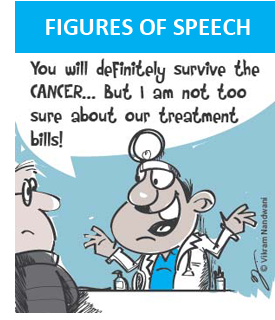
According to the World Health Organization, Cancer is one of the leading causes of death. Globally, there are over 200 types of Cancers, resulting in over 14.1 million new cases of this disease every year. What's alarming is data which showed that approximately 70% of deaths occurred in low and middle income countries, with late-stage presentation and inaccessible diagnosis and treatment being one of the reasons for the high mortality rate.
Data also indicated that between 30-50% of Cancer cases can be addressed or prevented by avoiding risk factors, through awareness and early detection and implementing existing evidence-based prevention strategies. A Cancer diagnosis can have a huge impact on most patients, families and caregivers, which is why palliative care and recovery and rehabilitation services for post treatment Cancer patients play a pivotal role, aimed at improving the quality of life.
With new Cancer cases or its incidence in India estimated to grow by 25% by 2020 (according to the Indian Council of Medical Research), early awareness and treatment is the best. Case in point are the Cancer crusaders: Yuvraj Singh returning to cricket after beating germ cell Cancer and model, Lisa Ray, bouncing back after defeating an aggressive bone marrow myeloma. The trend has always been patients moving to the West for Cancer treatments. But this is slowly changing as India too offers more extensive screening, advance technology and drugs to deal with the 'Emperor of Maladies.'
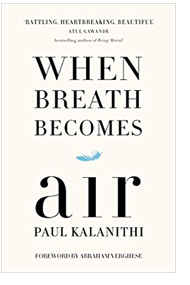
ET this month looks at Cancer Treatments in India. On the Podium, Suresh Ramu, Co-founder & CEO of Cytecare Hospitals shares his thoughts on how technology has helped in revolutionising Cancer treatments in the country. Jay in the Thinking Aloud section speaks on the growing awareness of the challenges surrounding the Big C. In the We Recommend segment, we review Paul Kalanithi's book, When Breath Becomes Air which is a memoir about his life and what makes life worth living in the face of death.
Our readers have shown interest on a topic that is graining traction everywhere. Therefore, in the Voices segment over the next few months, we bring to you a series on Living Diversity & Inclusion. To begin with, we have Mumbai based activist, Krupali Bidaye, who aims at making the transgender community's voice heard. ET in the upcoming issues will focus on the various topics on the challenges and strides achieved by this community, while also sharing other themes related to Diversity & Inclusion.
In Figures of Speech, Vikram's toon shows us the other side of medical treatments...the Big B!
As always, we value your opinion, so do let us know how you liked this issue. To visit our previous issues you can visit the Resources section on the website or simply Click Here. You can also follow us on Facebook, Twitter, LinkedIn & Google+ - where you can join our community to continue the dialogue with us!
|
|

|
|
'Whenever serious sickness or injury strikes and your body or mind breaks down, the vital questions are the same: What is your understanding of the situation and its potential outcomes? What are your fears and what are your hopes? What are the trade-offs you are willing to make and not willing to make? And what is the course of action that best serves this understanding?' (Atul Gawande, Being Mortal: Medicines and What Matters in the End)
Atul Gawande has been in the news again - this time as the choice of Buffett-Bezos-Dimon in their quest for lowering the healthcare costs in America. Gawande's work as a doctor and his eloquent abilities to simplify medical and other related issues for the benefit of the lay public had brought him global prominence. In particular, in his work, 'Being Mortal', he wrote about the various issues that arise due to the illness called Cancer, and its impact on the patient and all others connected to the patient. And, as indicated earlier, trade-offs are always involved while dealing with medical treatment and care related matters, none more so than in Cancer.
In recent times, awareness of the challenges surrounding Cancer (and for that matter, about many chronic medical matters in general) has grown thanks to the works of expressive medical experts with the ability to translate complex issues to relatively simple writing easily comprehensible to the wider public. Case in point, Siddhartha Mukherjee's award-winning book on Cancer, The Emperor of Maladies. Mukherjee's work, styled as a biography on Cancer, explains that 'Cancer is not one disease, but many diseases'. Consequently, medical scientists think of 'Cancers' and not a 'Cancer' and are seeking remedies for different types of Cancers.
Experts tell us that at its core, Cancer is the result of uncontrolled or runaway growth of cells in any part of the body due to a systemic malfunction and is usually manifested by the development of a lump, mass or tumor. Given the uniqueness of each person, it is not uncommon that successful treatment for a patient has to be tailored to his special needs as it is naive to expect one line of treatment for all Cancers. Inevitably, the absence of a common solution makes the task that much more difficult and makes the disease seem insurmountable. However, over the years, our understanding of the malady has grown, and doctors now speak of 'precision Cancer medicine' using therapies targeted directly at the Cancer cells with specific abnormalities. This avoids the collateral destruction to other normal cells which are behaving well unlike in the past where the general spraying of the shotgun triggered substantial damage, minimizing patient recovery.
The rise in palliative care is also a positive development in the treatment of Cancer. Recognising that palliative assistance is not limited to end-of-life care means that multiple forms of support can be explored, ranging from counselling (both to patients and their families) to meditation and pet therapy. All this endorses the view that healing requires a holistic approach and not just a reactive medical exercise. A missing piece in this jig-saw is the financial element. In India, the insurance sector has not raised its game to provide for genuine support to cases that face the trauma of immense medical costs arising from Cancer patient care. As is often noticed, the debilitating impact of Cancer is not faced by the patient alone but the long-term hit on the family's financial (and psychological) health is a matter that does not get adequate attention. While some insurance firms have been hawking special policies, expecting the insurance sector to think of creative solutions for reducing patient-care costs is perhaps asking for too much. Which is why all eyes will be on the Gawande led new firm to see how they tackle the larger and very complex subject of health-care costs because the best and most resolute minds (coupled with socially conscious hearts and deep pockets, one may add) are making a serious attempt to tackle the unthinkable. If this works in the US, there may well be pointers for other regions in the world, including India.
Cancer research is today a global activity with the best minds from around the world tackling this issue. Perhaps the most prominent instance is the assignment called the Cancer Genome Atlas, the follow-up project to the Human Genome Project which fully sequenced the normal human genome in 2003. Their phenomenal task: sequencing the genomes of several human Cancer cells, touted to become 'a compendium of every gene mutated in the most common forms of Cancer'. Early success in their project has raised hopes of more knowledge break-throughs but much remains to be done.
In a telling comment, Mukherjee noted in his book that, 'Nineteenth-century doctors often linked Cancer to civilization: Cancer, they imagined, was caused by the rush and whirl of modern life, which somehow incited pathological growth in the body. The link was correct, but the causality was not: civilization did not cause Cancer, but by extending human life spans- civilization unveiled it.' The message is clear that with greater life-spans in our society, there will be more cases of Cancer patients around us. No one will be untouched as all of us will have some friend, family member or perhaps, our own self, one day exposed to this medical reality. In the meanwhile, raising awareness that vulnerability to Cancer is wide-spread in today's world where life spans have increased, and that Cancer is curable with early detection, should be the way forward for us. With better understanding of the malady, the Big C need not be the nemesis that it is made out to be.
back to top ^
|
|

|
|
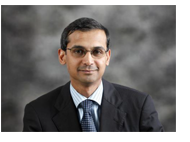 Suresh Ramu is the Co-founder and CEO of Cytecare Hospitals, a comprehensive Cancer care hospital network - the first Cancer 150-bed organ-site focussed Cancer hospital that went live on November 2016 on Airport Road, Yelahanka, Bangalore. He is also the Co-founder of Cytespace, a clinical research organization. Earlier, Suresh was associated with Quintiles for about 10 years in various global business roles. Prior to joining Quintiles in 2001, he was a Consultant for PricewaterhouseCoopers. Suresh was also an early team member for a start-up telemedicine company in India.
Suresh has a bachelor's engineering degree from the Indian Institute of Technology in Madras, and a post graduate degree in business administration from the Indian Institute of Management, Calcutta. He is passionate about excellence in healthcare and research.
ET: Can you please tell us about the current landscape of Cancer treatments in India?
SR: Cancer is not one disease but a family of many different diseases, but most often related to an unregulated growth of tumor cells in the body that affects the functioning of the rest of the body. If detected early, a large number of Cancers can be cured or at least well managed, often at significantly lower costs and without reducing the quality of life.
With over 1.7 lakh new Cancer cases each year, it is expected to continue to grow at an alarming rate of over 12% per year over the next 10 years! Cancer treatment has been in the domain of government institutes like Tata Memorial Centre, Mumbai, and the Regional Cancer Centres across the country, apart from the oncology departments within large multi-speciality Trusts and private hospitals. Typically, these would include specialists of surgical, radiation and medical oncology. Some of these may also include nuclear medicine related capabilities.
Globally, the trend has been to create dedicated Cancer centres that are organ-site focussed with a team of Cancer specialists that deal with each organ-site class of Cancers. This improves the clinical outcomes delivered to the patients due to the expertise around the table by bringing in best-in-class treatment practices focussed on that organ-site. Also, a peer-reviewed process of Multi-Disciplinary Tumor Boards (MDTBs) helps in ensuring better governance and patient-centric treatment protocols being used.
There continues to be a significant gap in many areas of Cancer care in India:
- Concentration of specialists in urban areas though Cancer is as prevalent in the rural areas, and with a higher population skew in rural areas, the contrast of non-availability of Cancer care in rural areas is even more stark.
- Late detection of Cancers due to lack of awareness, lack of adequate medical diagnostics, inertia or procrastination, stigma or cost, results in very high mortality in India (~50% deaths within 2 years of detection).
- Cancer is often treated by general surgeons and pan-oncologists and this results in poor clinical outcomes and higher lifecycle cost of treatment. Cancer is a chronic condition and one needs to plan the protocol (pathways) of care that optimizes the overall outcomes and cost for the patient.
Governance of care becomes therefore important and this can be managed through Tumor Boards.
ET: Has technology helped in revolutionising Cancer treatments in India and world over? Please elaborate.
SR: Early diagnosis can benefit greatly and for this a lot of newer techniques are being researched upon. Liquid biopsies (blood test) that can detect many different Cancers early is something that is being widely researched and can change the way we detect Cancers early. Technology in terms of precision and 3D imaging, as well image-guided biopsies have definitely changed the accuracy and therefore the treatment modalities for patients.
Treatment using advanced linear accelerators, robotics and advanced drugs (immunotherapy) have also improved survival rates and the quality of life for patients
ET: Can you please throw some light on the recovery and rehabilitation services for post treatment Cancer patients in India?
SR: Pain and palliative care management that deals with the functionality and quality of life of patients during and after the treatment is a relatively new subject in India, but is highly important
Several speciality services like speech-swallow programmes, wound management, colostomy care, onco-nutrition and psycho-oncology needs to be offered to patients and their families to deliver a holistic care plan. With greater availability of talent in major metro cities, this is now possible in India.
ET: Cancer cases have been on a rise. What is your advice to readers on the awareness, early detection and the mind-set required to tackle this disease?
SR: Detect it early if you can. Go for screening programmes that can identify at least the most obvious and frequent Cancers, and if one can catch them early, then the cost and effort of treatment is reduced, and the quality of life and overall survival (we can talk of 10-year plus survival) is greatly enhanced.
Excessive exposure to tobacco/smoking or chemical plants/pollution can result in about 40% of all Cancers, but sometimes it can be due to genetic risk (about 10-15%) and sometimes just because of aging. So, it is better to check it out early by spending half a day each year or every two years above the age of 40 years.
ET: Please tell us of the services that are provided at Cytecare Cancer Hospitals and what makes it special.
SR: Cytecare is a comprehensive Cancer care hospital network, with its first 150-bedded facility on Airport Road, Yelahanka, Bangalore. This facility is equipped with all the latest medical equipment for diagnosis (radiology, pathology, laboratory) and treatment (medical, surgical, radiation, nuclear medicine) and also has centres of excellence for different types of Cancers - head & neck, breast, gastrointestinal and hepatobiliary (liver), gynaecological, urology, neurology, orthopaedic, haematology. Uniquely, each of these departments have full time teams of specialists who also are part of Tumor Boards ensuring governance of care for patients. The medical records are maintained electronically and the hospital is involved in cutting edge research work as well. Visit www.cytecare.com to know more.
back to top ^
|
|

|
|
 "You that seek what life is in death, "You that seek what life is in death,
Now find it air that once was breath.
New names unknown, old names gone:
Till time end bodies, but souls none.
Reader! Then make time, while you are,
But steps to your eternity."
The book is about the journey of a 36 year old promising neurosurgeon, Paul Kalanithi, who was diagnosed with terminal cancer in 2013. He was a talented doctor who not only contributed to the world of medicine but also found a way to pursue his love for the English language (earning two degrees in English literature from Stanford, and even considered pursuing writing as a full-time career!).
The read starts with eminent writer and doctor, Abraham Verghese who writes the foreword after Paul has reached his eternal destination. Dr Verghese asks readers to listen between the words of the book, because it is here that one might find the true meaning of life. The book, which Kalanithi wrote as he was dying, is published posthumously. The author found his calling towards neurosurgery at a time when his classmates opted for "lifestyle" careers. Kalanithi writes that "putting lifestyle first is how you find a job - not a calling". His love for his speciality came about as he was persistent on wanting to learn about "what really mattered in life". Paul describes in length, his initial training days as an intern, his love for his profession and the ordeal that many doctors had to go through especially making 'judgement calls', which were usually life or death decisions.
When Breath Becomes Air highlights the very fact that all of us are running a race against time. Each page is layered with thoughts on life and death, and the various roles that we play in each fleeting moment of life. Paul's decision to not avert his eyes from death epitomises a fortitude that we do not celebrate enough in our death avoidant cultures. Even before he was diagnosed with Cancer, as a doctor, he wrestled with questions on how to live a meaningful life.
Kalanithi found poetry more comforting than scriptures. Among many other poets, Paul writes about American poet Walt Whitman and his vision of the "Physiological-Spiritual Man" in the modern age. Kalanithi with his busy schedule was not void of personal and marital concerns. Relying on his strength and support from close family and friends, his story is a transformative journey from a student to a doctor to a patient and everything in between. The sad irony was that by the time he was ready to enjoy a life outside the operating room, he had to learn how to die. What one can clearly learn and hold on to is that despite life's dark and impossible moments, one must not lose sight of the daily act of embracing life and death, balancing joy and pain and exploring new depths of love and gratitude along the way.
The book is slightly disturbing knowing that the author had written his book in the last few days of his life. Peppered with compassion and in a matter-of-fact way, without signs of self-pity, the book will keep you hooked on till the very end. A well written book, this read is not for the faint hearted. One can sense the emotions in every word that was written by Paul especially towards the end of his journey amid the punishing fatigue of progressive cancer and his palliative care appointments. His death is indeed a great loss to medicine, but his words will definitely live on.
back to top ^
|
|

|
|
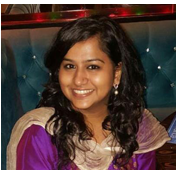 Krupali Bidaye is an independent Consultant working in the field of Social Inclusion, Communication and Diversity. Her expertise lies in Gender Diversity and Inclusion, where she focuses on sexual minorities and transgender persons. Krupali Bidaye is an independent Consultant working in the field of Social Inclusion, Communication and Diversity. Her expertise lies in Gender Diversity and Inclusion, where she focuses on sexual minorities and transgender persons.
She has been a trans ally and a strong sponsor of rights of transgender persons for more than a decade. Krupali has worked at the grassroots with the transgender persons across various states in India for their mainstreaming and inclusion through a Mumbai based group of volunteers - Anam Prem. She serves as a special invitee to the State Planning Commission, Government of Chhattisgarh, working with the Social Inclusion Task Group leading the portfolio for inclusion of Transgender Persons in the state. She has led the group to deliberate on the Transgender Persons' Bill 2016, and drafted the recommendations on behalf of Government of Chhattisgarh (GoCG) which were submitted to the Parliamentary Standing Committee. She is presently working as a UNICEF Consultant on Transgender Persons Issues for Inclusive WASH pilot project of the State Swaccha Bharat Mission, GoCG and a retainer Consultant with Shodhana Consultancy, Pune.
Having graduated from St. Xaviers College, Mumbai in mass media with journalism as her specialisation, she further pursued her post-graduation in political science from Mumbai University. She has a Post Graduate Diploma in Philosophy of Communal Harmony and Social Peace.
She has been honoured with Yashwantrao Chavan Yuva Puraskar 2018 and has received a Special Jury Mention at the Sandvik India Gender Awards 2018. She has also been the recipient of Ivolunteer Hero Award 2017 for her outstanding voluntary services in the field of gender mainstreaming and diversity. She has been recognised as one of the Top 100 Diversity and Inclusion Leaders at the World Diversity Congress 2018.
Krupali is a passionate advocate of gender diversity and is striving to redefine the gender discourse beyond the binaries.
Blue...it's a boy! Pink...it's a girl! The world around is gender segregated into a binary world. We are either men or women, and we play gender roles defined specifically for us. Then there are gender taboos and rule books. While one thing is appreciated for men the same may be discouraged for women; for example, while men are encouraged to chase their careers, we still find women being asked to 'manage' their careers along with responsibilities at home. Gender segregation has led to our thought processes also being binary driven, the Mars-Venus dichotomy has now entered an academic space.
The American Psychological Association defines 'transgender' as an umbrella term for persons whose gender identity, gender expression or behavior does not conform to that typically associated with the sex to which they were assigned at birth. 'Sex' is one's biological status as male or female and 'gender' is a social construct of how 'sex' in interpreted in different cultures. However, some individuals do not fit into the societal construct of binary genders and chose to express their identities differently. While some men chose a female gender identity and call themselves 'transwomen', some 'women' chose to express themselves as 'transmen', and there may be some individuals who do not identify with either of the genders and can be referred to as 'non-gender conforming'. While gender identity and expression is a choice under a larger ambit of human rights, it is often assumed to be assigned to the individual as part of societal rights. Thus, gender is a diverse concept and cannot be simplified to be understood by only defining it in terms of 'binaries' - men and women.
However the gender discourse the world over has been dominated by women's issues, discussions around gender equality, gender abuse and violence, gender diversity, gender policy making, and has been restricted to either women or to the binary world. Barring a few educational institutions around the world, gender discourse in academic studies focuses largely on women's movements and feminist ideologies. Gender policies are being made whether it is governments or corporates. But where are the 'gender invisibles'?
In India, the revolutionary and landmark Supreme Court Judgement on Transgender Rights (NALSA vs Union of India), 2014, legally institutionalized 'transgender' as the 'third' gender beyond binaries, and also upheld the right of 'self-identification' of gender identity. However, since then there has not been a significant change in 'gender discourse' nor in our mind-sets. The gender invisibles still remain invisibles even though they are right in our sight. The Census of India (2011) puts the number of Transgender persons at 4.88 lakhs persons, which is gross under estimation due to the ambiguity in understanding the terminologies related to the 'transgender' universe, and can be attributed to various reasons including the unwillingness to 'come-out' with transgender identities. This only brings to the fore that 'transgender' persons are being missed out in the development dialogue. Before it is too late, we need to look for the 'missing gender'. Gender diversity has to be understood in its true sense by acknowledging gender beyond binaries. Gender is a choice and needs to be respected!
back to top ^
|
|
| |
|
THROUGH THE LENS
|
|
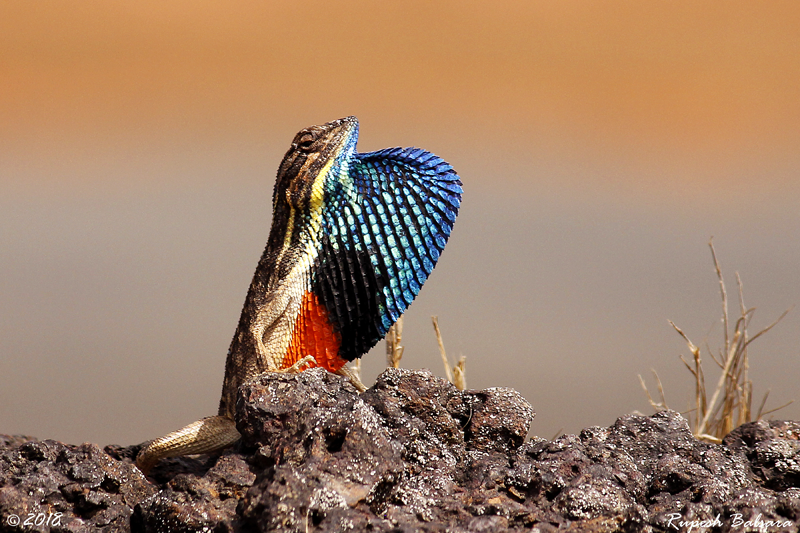
Wildlife photographer Rupesh Balsara spots Maharashtra's dragon or the Fan-Throated Lizard at Satara. The species is found only at high elevation plateaus and rocky areas. It has an almost ocean-blue, turquoise colour all the way down from its mouth to the end of its throat, followed by a small black portion. During the mating season, which is between May and June, the male develops colours on its throat to attract females.
|
|
|
|
Empowered Learning Systems
Pvt. Ltd.
www.empoweredindia.com
101, Lords Manor, 49, Sahaney Sujan Park,
Lullanagar, Pune – 411040,
Maharashtra, India


|
 The ELS Lotus logo is trademark of Empowered Learning Systems Pvt. Ltd. The ELS Lotus logo is trademark of Empowered Learning Systems Pvt. Ltd.
©2018 Copyright Empowered Learning Systems Pvt. Ltd. (ELS). For private
circulation to clients and well-wishers of ELS. While ELS endeavors to ensure
accuracy of information, we do not accept any responsibility for any loss or
damage to any person resulting from it.
|
|
|
|
| |