|
|
|
THINKING ALOUD
Stepping into the CEO's role
Jay
|
 |
PODIUM
Neeru Madan
Managing Director and General Manager - BioPharma Services Division, Thermo Fisher Scientific
|
 |
|
WE RECOMMEND
The Man Behind the Wheel: How Onkar S. Kanwar Created a Global Giant
Tim Bouquet
|
 |
WONDER WOMEN
Prajakta Shetye-Deo
Co-Founder of Posiview Consulting Partners Private Limited
|
 |
|
Dear Reader,
The transition to a Chief Executive Officer is truly a career leap and leaders already at the coveted corner office will enlighten you that it comes with its own set of challenges. Case in point is the recent boardroom tug-of-war at the Tata Group which threw some perspective on the importance of leadership at the corner office and its potential impact on its stakeholders.
In this month's ET, we throw some light on the Leadership Challenges in the Corner Office. A 2017 survey conducted by the Conference Board revealed that the biggest challenges for CEOs came from global volatility and unprecedented disruption, wherein corporate leaders are coping by focusing on talent, culture and fiscal discipline. On the Podium, Neeru Madan - Managing Director and General Manager of the BioPharma Services Division at Thermo Fisher Scientific speaks about the various characteristics that make a good leader to steer the company in our current business environment.
Gender diversity at the corner office is also showing a changing trend. In a study conducted by leanin.org in association with McKinsey on women in the workplace, statistics revealed that companies' commitment to gender diversity is at an all-time high, but they are struggling to put their commitments into practice. Although the survey did paint a fairly grim picture of gender diversity, globally, the results were more encouraging than they were in the past. Another study conducted by Mckinsey highlighted the fact that achieving gender equality in India's workplaces, especially at management levels would have a larger economic impact than in the other regions of the world. Significant progress has been made in this arena where corporates have stepped up affirmative action practices. Neeru Madan adds some nuggets of her knowledge on this aspect as well.
Citing research by Dave Ulrich & Korn Ferry, Jay puts forth his thoughts on the potential that CHROs have to move into the corner office in the Thinking Aloud segment.
In the We Recommend section, Meeta Lee reviews Tim Bouquet's book, The Man Behind the Wheel, an insightful read of businessman and Founder of Apollo Tyres, Onkar Kanwar's journey, and how he turned his company to a global brand. His extraordinary achievements have been highlighted in this book from his early days in the US to building factories in India.
We feature the Co-Founder of Posiview Consulting Partners Private Limited, Prajakta Shetye-Deo, in our new section, Wonder Women. Her enthusiasm reverberates through her entrepreneurship journey, which is indicative from the fact that her boutique investment banking consulting firm recently managed to cross the INR 1,000 crore mark in sanctions alone!
In Figures of Speech, Vikram introduces us to his 'CEO'!
As always, we value your opinion, so do let us know how you liked this issue. To visit our previous issues you can visit the Resources section on the website or simply Click Here. You can also follow us on Facebook, Twitter, LinkedIn & Google+ - where you can join our community to continue the dialogue with us!
|
|

|
|
Stepping into the CEO's role
|
|
- Jay
|
|
The Chief Executive Office's shoes are the biggest shoes to fit into in an organisation. Stepping into them requires preparation over the years if one has to truly justify the role being entrusted to you. While traditionally this role was seen as the preserve of Finance or Manufacturing or Marketing personnel, there is now a new contender for the corner office: the Human Resources Director.
Actually, the idea is not really so new as it appears. There have been stellar CEOs in the Indian industry - Russi Mody being a notable example - who came into the corner office after playing the Chief of Human Resources role. Why is this not common yet? While CEOs continue to mouth platitudes about people being their most precious resources, many Human Resources functionaries will confess that the challenge is quite personal.
The classic Dave Ulrich Model of HR roles presents 4 elements: HR as an Administrative Expert, as Employee Champion, as a Change Agent & as a Strategic Partner. Too often HR professionals are guilty of being restrained to the first two roles. In fact, this is a self-imposed isolation as they do not push themselves to acquiring the skills & business acumen to play the Business role. I would stress that while the tendency is to play a minor partner's role, not often do we find HR professionals dynamic enough to get into the driver's seat to shape things strategically. Instead, they remain happy to be order-takers rather than genuinely risking all with deep conviction in their positions.
Interestingly, a couple of years ago Harvard Business Review carried a feature about the research by Dave Ulrich & Korn Ferry. To highlight in brief their key finding, after examining 14 aspects of leadership amongst C-suite executives, the conclusion was that 'except for the COO (whose role and responsibilities often overlap with the CEO's), the executive whose traits were most similar to those of the CEO was the CHRO. "This finding is very counterintuitive-nobody would have predicted it," Ulrich says.'
Why then is the transition from the CHRO role to CEO still uncommon? I believe that the lack of personal drive and ambition to play the CEO role is a key factor. If one is ambitious enough, then one prepares oneself for it. As Ulrich & his collaborator noted in the above-mentioned research, 'The challenge for CHROs is to...acquire sufficient technical and financial skills, in early education and in career steps along the way, if succession to CEO is a desired outcome.'
With a greater thrust on orchestrating results from knowledge workers in today's organisation, there is an untapped opportunity waiting for CHROs to move into the corner office. The coming years should see more instance, I believe. However, the question remains: are they ambitious enough to venture forth?
back to top ^
|
|

|
|
Interview with Neeru Madan
|
|
Managing Director and General Manager - BioPharma Services Division, Thermo Fisher Scientific
|
|
 Neeru Madan is the Managing Director and General Manager of the BioPharma Services Division (BSD) of Thermo Fisher Scientific, Ahmedabad. She has been successful in leading, developing and implementing the company's business plan in India, encompassing growth objectives, new project initiatives and operational excellence. Apart from her leadership and team management roles at Thermo Fisher Scientific, Neeru has been instrumental in building relationships with major pharma, biotech corporations, clinical research organisations, clinical development and manufacturing organisations. Prior to these roles, she was the Director - Human Resources for the APAC region for Thermo Fisher Scientific. Neeru has a Master's degree in labour welfare from Gujarat University and has attended various courses on leadership and general management skills.
ET: The Chief Executive's role is an all-encompassing role. What skills make a good leader in the current business scenario?
NM: In such an influential position, a person has to demonstrate a variety of skills to set themselves apart. One being the ability to communicate openly - you can only run a successful business if you continuously fix your flaws, and the only way your employees will feel comfortable about making these flaws known is when they know you are open for feedback and communication. In today's world, the stereotypical "stern boss" behaviour simply won't work. In keeping with the avoidance of such a characteristic, it is important to create a very inclusive culture in the workplace. For people to give their all they need to be valued and nourished, they need to feel as if they are working with the company not necessarily for it. Constant evolution is necessary for a successful and lucrative business. This idea of evolution applies not only to the way you handle your business but also to employees and yourself and for this you have to drive a culture of continuous learning. The true nature of a business includes upheavals and downfalls, and it is vital to learn from it all, to learn from your successes and failures and evolve as a human being. Apart from this, it is important to collaborate and network with other organisations. Congruent with the idea of evolution, it is important to realize that an outside perspective is important as well. Furthermore we aren't confined to learning from our own successes and failures; we can also evolve by learning from our surroundings.
ET: More companies are embracing the idea of gender diversity in senior management & general management roles. What are your thoughts on the same?
NM: Gender parity is a thing of the past. More and more women are given leadership opportunities especially in the banking sector and multinational corporations are steadily changing the trend as well. Corporations are more inclusive as compared to the past because they've realized the true value that women leaders bring to the table. Women have learned to be more vocal and are more willing to contribute to key decisions. Over the coming years, the concept of gender will blur and opportunities will be made available to talent irrespective of gender. I see millennials contributing heavily to this cause, and bringing in a wave of change on this front.
ET: You are amongst the very few Human Resources professionals who have moved to the corner office and taken charge of a firm that is known for its technical strengths. Please share with us how the transition happened and how have you created your success?
NM: HR is truly the fabric of an organisation. As a leader, I cannot work alone and my background in HR offers me an edge, because I can work with people and produce great results. As an HR professional, I have always invested time into understanding business processes and strategies and subsequently super imposed my HR strategies with them to drive better results. I have always had a keen interest in business development and regulatory affairs. For management positions, the need for a strong leader, at times, supersedes technical expertise and great leaders cannot be limited to functions. I was always looked at as a successor to the MD of the company and when the opportunity presented itself, the organisation was more than willing to offer me the role. To be honest, the transition was tough because I was suddenly accountable for P&L, people, customers, delivery and compliance. But I was committed and persistent to convert this opportunity into a win. It was a huge learning curve full of challenges but with the support of enabling leaders and determination - I was able to make it a success. And my HR background gave me an edge as I was able to understand customers and people dynamics very quickly, and so was able to offer right solutions and build pinpoint strategies.
ET: As a professional, can you please share some nuggets of advice for young managers who intend to create change in their respective organisations?
NM: Always be open to change, the world around you will keep moving and changing and you must inculcate timely and appropriate change within yourself to stay ahead of the pack - enjoy the challenges that change brings. Understand that short term change will bring chaos initially and later clarity and results; always set your eyes on the bigger picture. Be patient and persistent and do not drop the ball. Take it to the finish line.
ET: Can you tell us about your company Thermo Fisher and some of the initiatives undertaken to drive excellence?
NM: Our Practical Process Improvement (PPI) Business System links Customer Allegiance, Quality and Productivity together to help drive continuous improvement and profitable growth. Our customers expect us to be at the leading edge. Through PPI we not only improve operating and process efficiency but also improve customer experience. We get customer feedback through customer allegiance surveys and it is our constant endeavour to work on the feedback and continuously raise our customer experience bar. For us the Customer Allegiance Score (CAS) is the voice of the customer and a very important metric from the excellence perspective. PPI also supports us to improve quality and compliance and bring excellence in what we do. Since our business is to serve the waiting patient at the right time, with the right medicine, in the right condition, we promote a zero error environment and habituate a "right first time" and "every time on time delivery" mind-set within our employees.
back to top ^
|
|

|
|
The Man Behind the Wheel: How Onkar S. Kanwar Created a Global Giant
|
|
- Tim Bouquet
|
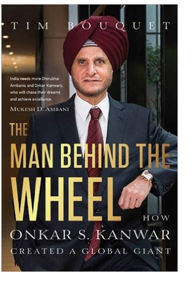 "The Man Behind The Wheels" by Tim Bouquet, is the story of the visionary entrepreneur, who chased his dream and made Apollo Tyres the world's 17th biggest tyre manufacturer. Onkar S Kanwar, Chairman and CEO of Apollo Tyres, led the organisation achieving phenomenal success for the group. The book takes you through the fascinating journey of Apollo Tyres from an Indian tyre manufacturing company to a global giant, with detailed description of the political and historical events, despite which Apollo Tyres rose, offering a wide gamut of products and global presence. "The Man Behind The Wheels" by Tim Bouquet, is the story of the visionary entrepreneur, who chased his dream and made Apollo Tyres the world's 17th biggest tyre manufacturer. Onkar S Kanwar, Chairman and CEO of Apollo Tyres, led the organisation achieving phenomenal success for the group. The book takes you through the fascinating journey of Apollo Tyres from an Indian tyre manufacturing company to a global giant, with detailed description of the political and historical events, despite which Apollo Tyres rose, offering a wide gamut of products and global presence.
In this book, Tim Bouquet has revealed an interesting interpretation of the religious violence that swamped the Sikh community and this allows the reader to discover how that period was crucial in shaping Onkar's entrepreneurial drive. Onkar's family survived the traumatic events post Mrs Indira Gandhi's assassination and he got back into action just after a few days despite the violence on the streets. 1990 was a landmark year for Apollo Tyres and there was no looking back after that. One can dig deep into the negotiations that Onkar was involved with the major tyre manufacturers outside India - Michelin, Dunlop and one of the most important being Cooper Tires, which he sealed at the age of 70, that being the biggest deal of his business career. Not only was it bigger than Tata's takeover of Jaguar Land Rover, but there was a lot of controversy and friction which it had caused in China.
There are great learnings from three generations in this book starting with Raunaq Singh, his son Onkar and his son Neeraj. The climax is when Onkar had to fallout with his father, who was his role model. Onkar describes this as the darkest and bleakest period in his life and though he was not happy to see his family divided and the company suffer, he did what he believed was the right thing for the stakeholders and for the company.
Tim Bouquet, author and journalist for leading publications such as The Telegraph and Time magazine, describes his experience of writing this book as a very enriching journey. Not only is the book an insightful and exciting story of Apollo Tyres but it also tells us the story of fathers, sons and family businesses and the responsibilities and emotions involved.
Tim Bouquet, author and journalist for leading publications such as the telegraph and time magazine, describes his experience of writing this book as a very enriching journey. Not only is the book an insightful and exciting story of Apollo Tyres but it also tells us the story of fathers, sons and family businesses and the responsibilities and emotions involved.
back to top ^
|
|

|
|
Prajakta Shetye-Deo
|
|
Co-Founder, Posiview Consulting Partners Private Limited
|
|
 Prajakta Shetye-Deo is a Chartered Accountant with over 16 years of experience across the areas of Banking, Finance, and I-Banking. For the last decade, she has focused on mentoring start-ups not just to raise finance but also to scale-up. Prajakta has an excellent academic track record with a merit rank at nearly all competitive exams. She graduated from the Commerce stream, topping Pune University. She completed her Chartered Accountancy Course in 2000 and secured a place in the top ten of the all-India merit list at all three levels of the course. She has worked with ICICI Bank in the Treasury Middle Office Group and was instrumental in setting up their Dealing and Settlement systems in their treasury, the Negotiated Dealing System (NDS) as well as the Commodities Trading System. Prajakta then moved to the HSBC Group and was a Project Leader with their Global training outfit. She led the Securities & Capital Markets training team and delivered training successfully across countries like Japan, Argentina, Taiwan, Malaysia, etc. in 5 regions (Asia-Pacific, Australia, Middle-East, and Far East & Latin America). Prajakta Shetye-Deo is a Chartered Accountant with over 16 years of experience across the areas of Banking, Finance, and I-Banking. For the last decade, she has focused on mentoring start-ups not just to raise finance but also to scale-up. Prajakta has an excellent academic track record with a merit rank at nearly all competitive exams. She graduated from the Commerce stream, topping Pune University. She completed her Chartered Accountancy Course in 2000 and secured a place in the top ten of the all-India merit list at all three levels of the course. She has worked with ICICI Bank in the Treasury Middle Office Group and was instrumental in setting up their Dealing and Settlement systems in their treasury, the Negotiated Dealing System (NDS) as well as the Commodities Trading System. Prajakta then moved to the HSBC Group and was a Project Leader with their Global training outfit. She led the Securities & Capital Markets training team and delivered training successfully across countries like Japan, Argentina, Taiwan, Malaysia, etc. in 5 regions (Asia-Pacific, Australia, Middle-East, and Far East & Latin America).
Always wanting to work with, and for entrepreneurs and business owners in the SME segment, she and her husband, Vinit, started Posiview Consulting Partners Private Limited - a boutique investment banking consulting firm in the year 2006. With Vinit undertaking all the front-facing roles of PR, marketing and pitching to VCs, she managed back-end operations like building financial plans, preparing investor memorandums, managing administration & statutory compliances, along with raising a family. Since 2007, she has worked closely with entrepreneurs, industrialists and technocrats, providing them business support, financial planning, equity and debt syndication services. The 2-member team were able to do some significant deals like the first brand equity deal in Pune with Seed Infotech and Bennett Coleman (investor). By 2009, they had 2 other employees, a decent balance sheet and a deal pipeline to boast of!
This is when she enrolled for the ISB Goldman-Sachs 10,000 Women Program. This program helped broaden her horizons in terms of how businesses could scale up. Mentoring helped her understand what should be her focus areas. Also, when she was steering, her Mentor, Jay, would pose the right questions that would help her prioritize. Refreshed and re-invigorated after the course, she jumped back into the business.
Having played multiple roles at Posiview in its journey over the last decade, Prajakta is now leading Posiview Ventures - the start-up consulting arm - as its Chief Mentor. She has personally trained over 300 and mentored numerous small business owners in entrepreneurship and business planning. From 2012-2014, she was associated with the world-wide Goldman-Sachs 10,000 Women Programme, training women entrepreneur-scholars at the Pune centre. Currently she is also a Mentor with the Cherie Blair Foundation for their "Mentoring Women in Business" program along with doing honorary mentorship for women entrepreneurs from developing countries. She is also the Chief Trustee of Posiview Marg Foundation where they work in the areas of girl-child education and women well-being & empowerment.
Over the years, the company has explored media associations and ventured into allied areas. The real-estate consultancy division of their firm crossed INR 1,000 crores in sanctions in FY15-16 alone. Her organisation has now developed the agility to quickly seize new opportunities that come their way. They now have four divisions with different Business Heads - Debt Syndication, Equity Syndication, Early-Stage Consulting and Training & Advisory Services and is now gearing up to launch RERA Advisory and Training services to help the Real Estate Sector ready itself for the compliances under the Real Estate (Regulatory and Development) Act, 2016.
Aristotle's words - "We are what we repeatedly do. Excellence then, is not an act, but a habit" - made a lasting impression on her at a very young age and she strives towards excellence in every task.
To know more about her venture, please visit, http://posiview.in/
For her outstanding work, we wish Prajakta the very best for the future!
back to top ^
|
|

|

|
On a recent trip to Gujarat, wildlife photographer, Rupesh Balsara, takes a snapshot of a Steppe Eagle with its feed, at Little Rann of Kutch, Gujarat. While the European and Central Asian Steppe Eagles winter in Africa, the Eastern ones migrate to India. This species closely resembles the Tawny Eagle and is mainly spotted around the numerous wetlands in Kutch. |
|
|
|
Empowered Learning Systems
Pvt. Ltd.
http://www.empoweredindia.com
101, Lords Manor, 49, Sahaney Sujan Park,
Lullanagar, Pune – 411040,
Maharashtra, India


|
 The ELS Lotus logo is trademark of Empowered Learning Systems Pvt. Ltd. The ELS Lotus logo is trademark of Empowered Learning Systems Pvt. Ltd.
©2017 Copyright Empowered Learning Systems Pvt. Ltd. (ELS). For private
circulation to clients and well-wishers of ELS. While ELS endeavors to ensure
accuracy of information, we do not accept any responsibility for any loss or
damage to any person resulting from it.
|
|
|
|
| |