
| August 2014 |
    |
| Thinking Aloud | Podium | We Recommend | Standing Ovation |
| Just Another Rock? – Jay | Interview with Colin Shah - Managing Director - Kama Schachter Jewelry Private Ltd | Articles & Links | Magic Bus India Foundation |
|
Dear Reader, Jewelry has always been considered important since the dawn of civilization and remains an integral part of the Indian lifestyle. In Egypt, for example, the ancient Egyptians placed great importance on the religious significance of certain sacred objects which was heavily reflected in their jewelry. Indian jewelry is as old as the history of the country itself. Rajas and Maharajas vied with each other to possess the most exquisite and magnificent pieces of gems and precious stones. The significance of jewelry in the country is evident from the fact that on many auspicious occasions, jewelry forms a part of gifts and in adorning one’s self. Diamonds, on the other hand, have never been out of fashion with their breathtaking brilliance and radiance. The stones have been serenaded by Marilyn Monroe, backed by Frank Sinatra's classic, 'Diamonds are a girl's best friend'. Recent reports have also highlighted that diamonds could be an investor’s best friend thanks to global demand-supply concerns. With changing fads and social trends, the modern perception all over the world is transforming, placing importance not only on diamonds, but on other valuable gems and precious stones which forms the jewelry industry.This month we feature the subject of Diamond Jewelry. In Thinking Aloud, Jay explores the fascinating world of jewelry. Although challenges persist in this sector, it is a fact that the largest chunk of revenue for India comes from its exports of gems and jewelry. Traditionally, this industry has been in the hands of family businesses, and it was the entry of the House of Tatas (Tanishq) which transformed the nature for the industry. The other part of the article highlights the rise of diamond businesses. It is not only viewed as just another piece of rock today, but like in the West, the vision is to make a diamond an integral part of the jewelry collection of an Indian woman. This month on the Podium, first generation entrepreneur and Managing Director of Kama Schachter Jewelry, Mr. Colin Shah, talks about the Indian Jewelry industry and its uniqueness, with a focus on diamonds. Further, he also delves into the various challenges faced by jewelry suppliers in carving a niche in the international market. Mr. Shah highlights the importance of the presence of specialised jewelry e-tailers, stating that this business model is definitely advantageous given the cut throat competition of the jewelry industry. He also offers some insights on his journey and challenges faced as a first generation entrepreneur and speaks of what Kama Schachter Jewelry is all about. | |
|
In We Recommend, we share with you various links from the web world highlighting the growth of the Jewelry industry in the coming years, the importance of the yellow metal and how other gems and stones are trying to grab buyers’ attention.
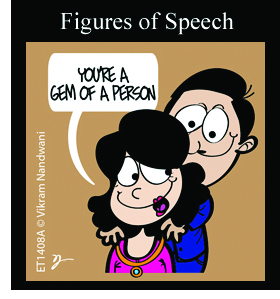
Standing Ovation features Magic Bus India Foundation, an NGO aimed at providing trained local mentors to children ensuring equal access to education, health services and social and emotional skills. The NGO uses the medium of sport and work with children and communities towards gender equality, better education and health. Magic Bus also builds the employability skills of young people, supports them in mapping out a career path, and then links them with employment or further education opportunities. The scale and the impact of this program are unique in the Indian context; currently, the NGO works with 250,000 children and 8,000 volunteer mentors every week from marginalised communities in India. In Figures of Speech, Vikram’s toon knows how to impress his better half! As always, we value your opinion, so do let us know how you liked this issue. To visit our previous issues you can visit the Resources section on the website or simply Click Here. You can also follow us on Facebook, Twitter, Linked In & Google+ - where you can join our community to continue the dialogue with us! | |


 |
We Recommend Articles & Links |
In ‘We Recommend’ this month, ET brings to you some quick links to reports and articles extracted from the World Wide Web related to the realm of jewelry, gems and diamonds. |
||||||||||
|
||||||||||
 |
Standing Ovation Magic Bus India Foundation |
|
Vision: Magic Bus gives millions of children living in poverty, the opportunity to control the way they view the world, the freedom to choose the role they will play in it, and the power to define their own destiny. Mission: Empower children and youth to discover and develop through sport. The Activitiy Based Curriculum (ABC) is a unique model that uses games to induce change. 40 sessions per year – each with a lesson, teach children about education, gender, health, and key issues affecting them. The games excel in building physical, social, and personal skills. Local youth volunteers are trained to be mentors and role models to other children. They conduct ABC sessions and act as catalysts for community change. On the other hand, the Connect Programme bridges the gap between possibility and opportunity through access to training and courses. Nearly all the youth end up pursuing higher studies and/or enrolling in our employability program. More than 220,000 children attend Magic Bus’ mentoring programmes delivered by youth leaders, every week in India. The 700 Magic Bus staff members and 8,000 youth leaders work in some of the poorest parts of the country, including the pockets of poverty in urban and rural Andhra Pradesh, Delhi, Goa, Haryana, Karnataka, Maharashtra, Odisha, Rajasthan and Tamil Nadu. With 250,000 children and 8,000 volunteer mentors every week from marginalised communities in India, this NGO is on course to have one million children in their programme by 2015. To learn more and to feel connected, one can visit http://www.magicbus.org. For its sporting cause, Magic Bus deserves a standing ovation! |
|
 Matthew Spacie founded Magic Bus in 1999 with a mission to give a better life, skills and better opportunities to underprivileged children. Magic Bus is Asia’s largest mentoring organization that is working to move some of the world’s poorest children from poverty. Present in various parts of India, Magic Bus uses mentors and a sports-based curriculum to engage children and ensure that they make the right choices from childhood, all the way through to better livelihoods as adults.
|
||
|

