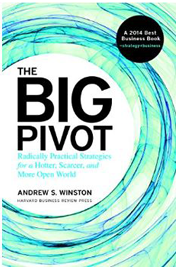
 Sustainability can no longer be small talk. We have pushed the limits of our natural resources that support our economy and society. The way companies currently operate will not allow them to keep up with the current and future rate of change. In his latest book, The Big Pivot, Andrew Winston writes about how companies must shift the way they operate in fundamental ways to deal with environmental issues, starting with a deep change in perspective. The book provides a practical roadmap to help leaders build resilient, thriving companies and communities in a volatile world. Andrew Winston is also author of Green to Gold and Green Recovery. He is a regular blogger and contributor to Harvard Business Review online, the Guardian and the Huff Post. Sustainability can no longer be small talk. We have pushed the limits of our natural resources that support our economy and society. The way companies currently operate will not allow them to keep up with the current and future rate of change. In his latest book, The Big Pivot, Andrew Winston writes about how companies must shift the way they operate in fundamental ways to deal with environmental issues, starting with a deep change in perspective. The book provides a practical roadmap to help leaders build resilient, thriving companies and communities in a volatile world. Andrew Winston is also author of Green to Gold and Green Recovery. He is a regular blogger and contributor to Harvard Business Review online, the Guardian and the Huff Post.
The first part of the book talks about today's mega challenges - climate change, resource constraints along with rising commodity prices and technology driven demands for more transparency. These 3 mega forces are what he calls 'hotter, scarcer and more open' in the title of the book. In the chapter on hotter, he talks about how climate change is an environmental issue, a security issue and an economic issue, giving the example of Hurricane Sandy. Scarce resources are blatantly exploited by the growing middle class population the world over. With technology, customers are now vocal about their criticism of companies that don't take their environmental responsibility seriously. At its core, the Big Pivot mind-set is about prioritizing environmental and social challenges and opportunities and treating them as central to business success.
Winston outlines ten core strategies that will help organizations make a shift in consciousness and purpose. He writes about focusing on a long-term vision and telling investors why it matters. Companies like Philips, Unilever, SAP are speaking to analysts and investors on how Sustainability drives their ability to innovate and increase margins. Organizations with a focus on Sustainability are redefining 'growth'. Unilever has set a goal of doubling revenues while seeking to halve their environmental footprint of the making and use of their products by 2020.
An interesting chapter in the book is the one on 'Pursuing Heretical Innovation'. New thinking that spurs innovation - for example, Adidas partnered with a company to dye fibre using heat and pressure thereby cutting down on energy and chemical use by 50% and no use of water! Kimberly Clark came up with the innovative - no cardboard core - toilet rolls. With a change in design, Puma's new 'Clever Little Bag' for shoes reduces cardboard use by 65%. In most organizations, the goal of maximizing profits is clear but when it comes to environmental performance, there's a breakdown. Winston tells us we should change the incentives and engage the whole organization. A good example is Walmart. Walmart wanted its suppliers to improve their environmental performance but when it came to buying decisions, it was still based on price. Walmart changed its buying process by creating Sustainability targets that were included in the employee's performance reviews.
The Big Pivot offers a unique perspective to an issue that concerns us all whether its society, government, organizations and individuals. Creating a healthier, cleaner, more stable world - with organizations using its enormous resources and skills to lead the change, will help sustain business, the economy and the world at large.
To read the complete issue click here.
|





 The ELS Lotus logo is trademark of Empowered Learning Systems Pvt. Ltd.